

Articles

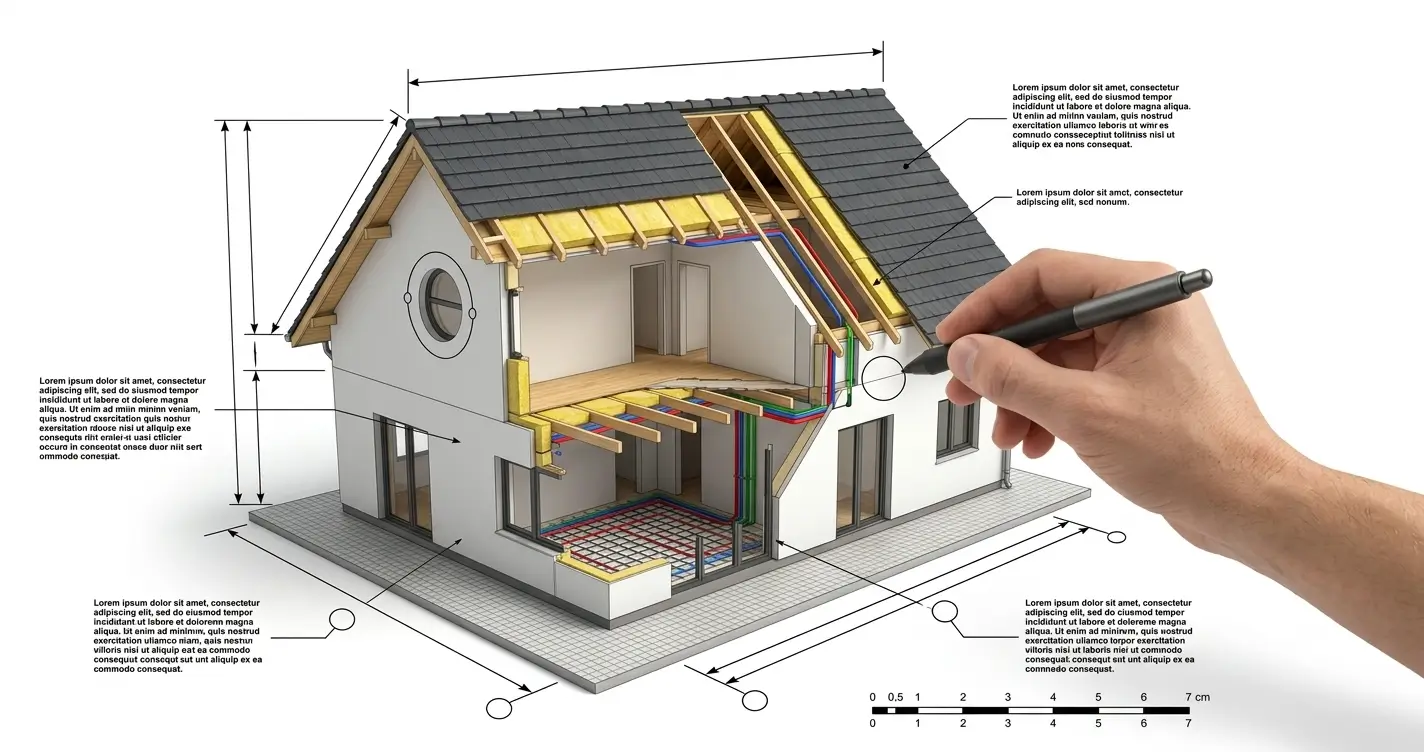
Evaluating a reliable MEP engineering service for industrial facilities requires an understanding of the complex technical, structural, and regulatory frameworks that govern high-demand production environments. Unlike typical commercial properties, industrial assets—such as advanced manufacturing plants, chemical processing units, biopharmaceutical cleanrooms, and logistics hubs—rely on heavy-duty mechanical, electrical, and plumbing (MEP) systems that are directly integrated into the facility’s core operations.
Engineering failures in these environments do not merely cause occupant discomfort; they lead to catastrophic production stoppages, severe occupational safety hazards, environmental compliance violations, and millions of dollars in operational losses. Therefore, identifying an experienced, technically competent MEP engineering partner is a critical step in securing the long-term viability and safety of any industrial asset.
The Specialized Requirements of Industrial MEP Design
Industrial facilities operate under extreme mechanical loads, severe environmental conditions, and rigorous compliance mandates. Consequently, standard commercial design methodologies are entirely inadequate. A qualified MEP firm must possess deep competence in material science, thermodynamics, fluid dynamics, and complex electrical engineering to address these unique operational realities.
High-Demand Mechanical and HVAC Engineering
In an industrial context, heating, ventilation, and air conditioning (HVAC) systems are engineered primarily to support specialized manufacturing processes, maintain product integrity, and ensure the containment of hazardous byproducts. The volume of air turnover, sensible heat loads, and filtration requirements in these spaces are significantly higher than those found in standard office environments.
For example, cleanrooms used in semiconductor and pharmaceutical manufacturing require precise laminar airflow patterns and continuous relative humidity control to prevent micro-particulate contamination. Conversely, heavy assembly plants and chemical units require specialized exhaust ventilation systems, spark-proof equipment, and direct-source capture hood networks to isolate toxic or flammable gases.
To calculate the immense sensible and latent cooling loads required to stabilize these industrial environments, design engineers apply psychrometric equations to analyze the thermodynamic properties of moist air:
qₛ = Sensible heat transfer rate (BTU/h)
qₗ = Latent heat transfer rate (BTU/h)
qₜ = Total heat transfer rate (BTU/h)
CFM = Volumetric airflow rate (cubic feet per minute)
T = Dry-bulb temperature (°F)
W = Humidity ratio (lb water/lb dry air)
h = Enthalpy (BTU/lb dry air)
To ensure these calculations are accurately translated into highly efficient mechanical ductwork and equipment layouts, facility managers rely on specialized HVAC system design services to minimize energy expenditure and eliminate thermal stratification in high-ceiling structures.
Heavy-Duty Industrial Electrical Engineering
Industrial electrical infrastructures must support massive inductive motor loads, advanced automation platforms, continuous conveyor systems, and Automated Storage and Retrieval Systems (ASRS). These systems demand robust, high-capacity electrical distribution systems that incorporate dual-feed utility substations, main-tie-main configurations, and extensive harmonic mitigation equipment.
To prevent catastrophic power interruptions, engineers design redundant backup power generation networks consisting of multiple medium-voltage diesel generators and large-scale uninterruptible power supply (UPS) units.
Furthermore, industrial electrical design requires detailed short-circuit calculations, selective coordination studies, and arc flash assessments to ensure that overcurrent protection devices isolate faults rapidly and minimize danger to personnel. Comprehensive lightning protection and grounding grids are also mandatory to shield sensitive control systems and instrumentation from transient voltage surges.
Process Piping and Advanced Industrial Plumbing
Plumbing in industrial facilities extends far beyond domestic water lines and standard sanitary drainage. It encompasses highly complex process piping networks engineered to transport raw chemicals, compressed gases, high-pressure steam, and corrosive wastewater.
Material selection is highly critical in these designs; piping must be selected based on its chemical compatibility, pressure rating, and thermal performance. ASME B31.3 (Process Piping) governs the structural integrity and design limits of these systems. The formula used to calculate the minimum required wall thickness t of a pipe under internal pressure is:
t = (P × D) / (2 × (S × E × W + P × Y))
Where:
t = Minimum required wall thickness of the pipe
P = Internal design gauge pressure
D = Outside diameter of the pipe
S = Allowable stress value for the pipe material at the operating temperature
E = Longitudinal joint quality factor
W = Weld joint strength reduction factor
Y = Dimensionless coefficient based on the material type and design temperature limits
Additionally, to prevent toxic industrial fluids from entering municipal drinking water networks, engineers incorporate heavy-duty reduced pressure zone (RPZ) backflow preventers and physical air gaps. The complex geometry of these water and wastewater piping networks requires specialized MEP plan services to successfully map out floor trenches, utility access pathways, and physical structural clearances.
Technical Differences Between Commercial and Industrial MEP Systems
To illustrate why specialized engineering is required for manufacturing, warehousing, and power facilities, the table below provides a side-by-side comparison of standard commercial MEP systems versus heavy industrial systems:
| Design Parameter / System Feature | Standard Commercial Buildings | Heavy Industrial & Manufacturing Facilities |
|---|---|---|
| Piping & Code Framework | Local Plumbing Codes (e.g., IPC, UPC) | ASME B31.3 (Process Piping), ASME B31.1 (Power Piping), API 570 |
| Material Selection Scope | PVC, copper, and carbon steel | 316L stainless steel, alloy steels, exotic metals, and specialized high-density polymers |
| Wastewater Management | Standard grease traps and sanitary sewer discharge | Specialized chemical neutralization, oil-water separators, and effluent treatment plants |
| HVAC Air Management | Re-circulated air focusing on occupant thermal comfort | Single-pass 100% outdoor air, laminar flow, negative/positive pressurization, and process exhaust |
| Electrical Load Density | Moderate load densities (2–5 W/ft²) | High load densities (50–200+ W/ft²) featuring heavy inductive motor loads |
| Uptime & Redundancy | Limited to basic life safety emergency lighting | Full N+1 or 2N system redundancy for mechanical cooling, ventilation, and electrical power |
| Fire Suppression Design | Wet-pipe systems with standard hazard classifications | Specialized dry-pipe, pre-action, foam, deluge, or FM Global-compliant suppression systems |
Selecting a Reliable MEP Engineering Service for Industrial Facilities
Identifying and selecting a reliable MEP engineering service for industrial facilities requires evaluating potential partners across several critical factors, including their technical depth, resource scale, geographic reach, and industry-specific experience.
According to the authoritative ENR Top 500 Design Firms registry, several major multinational engineering corporations and specialized regional practices have set the industry benchmarks for executing complex industrial projects.
1. Jacobs Solutions Inc.
Jacobs is consistently ranked at the top of the ENR design firm listings, recognized globally for its highly integrated design-build and program management capabilities. The firm provides comprehensive, end-to-end engineering services for advanced manufacturing facilities, aerospace structures, clean energy installations, and large-scale pharmaceutical campuses.
Jacobs’ MEP division specializes in integrating complex digital infrastructure, advanced computational modeling, and lifecycle costing directly into the early design phases of industrial mega-projects. By incorporating “Sustainable Design Intelligence” into their workflows, Jacobs helps asset owners optimize their thermal management systems, reduce carbon emissions, and minimize physical constructability risks before starting on-site construction.
- Core Strengths: Advanced digital twin development, aerospace and biopharmaceutical specialization, global resource scalability, and highly comprehensive lifecycle cost analysis.
2. Burns & McDonnell
Burns & McDonnell is a 100% employee-owned engineering, architecture, and construction firm that excels in heavy industrial processing, refining, and power generation markets. The company is highly ranked across multiple industrial sub-sectors, including chemical processing, food and beverage manufacturing, and aerospace assembly lines.
Because Burns & McDonnell operates as a full-service EPC (Engineering, Procurement, and Construction) contractor, its MEP engineering teams design systems with a deep understanding of constructability, material procurement constraints, and field installation logistics. This integrated contractor-engineer relationship helps minimize field coordination errors, reduce change orders, and compress overall construction schedules.
- Core Strengths: Turnkey design-build delivery, process process piping design, central utility plant engineering, and industrial compliance certifications.
3. AECOM
AECOM is a premier global infrastructure consulting firm with a massive technical staff capable of solving the most demanding engineering challenges. AECOM’s building services engineers are at the forefront of digital integration, utilizing advanced Building Information Modeling (BIM), energy simulation software, and complex Computational Fluid Dynamics (CFD).
Their industrial focus centers on high-performance logistics hubs, automotive assembly lines, data centers, and advanced manufacturing operations. AECOM specializes in coordinating multi-disciplinary designs across borders, ensuring that projects comply with both local municipal regulations and strict international engineering standards.
- Core Strengths: Computational Fluid Dynamics (CFD) modeling, mega-scale logistics facility engineering, and advanced smart-building automation.
4. WSP USA
WSP USA is recognized globally for its leading-edge work in sustainable building consulting, resource efficiency, and decarbonization. Within the industrial sector, WSP’s mechanical and electrical engineering divisions specialize in transitioning facilities toward low-carbon operations, integrating electrification systems, and optimizing industrial water cycles.
WSP’s design methodology treats the entire facility’s energy, water, and waste outputs as a single, highly integrated ecosystem. This systems-level approach allows them to design highly efficient waste-heat recovery systems, closed-loop industrial water reuse systems, and comprehensive microclimatic controls.
- Core Strengths: Industrial decarbonization strategies, LEED and BREEAM certification administration, and complex environmental compliance engineering.
5. Syska Hennessy Group
Syska Hennessy is a specialized, global engineering, consulting, and commissioning firm with nearly a century of building systems experience. The firm is a recognized leader in mission-critical facilities, laboratories, data centers, and high-tech manufacturing plants where system reliability and uptime are paramount.
Syska Hennessy’s engineering teams conduct rigorous energy modeling, performance testing, and lifecycle analyses to design resilient on-site central utility plants, medium-voltage power systems, and specialized environmental control systems.
- Core Strengths: Critical systems engineering, mission-critical redundancy planning (N+1, 2N), and on-site generation/microgrid integration.
6. IMEG Corp.
IMEG Corp. is a leading national engineering firm with a powerful regional presence throughout the Midwest and broader United States. IMEG offers deep expertise in advanced manufacturing facilities, automotive complexes, and specialized food processing plants.
Their teams are highly adept at transitioning existing legacy industrial spaces into modern, high-performance operational environments through comprehensive structural, mechanical, electrical, and plumbing upgrades.
- Core Strengths: Midwest regional depth, rapid tenant improvement and retrofit design, robust BIM coordination, and specialized technology/low-voltage engineering.
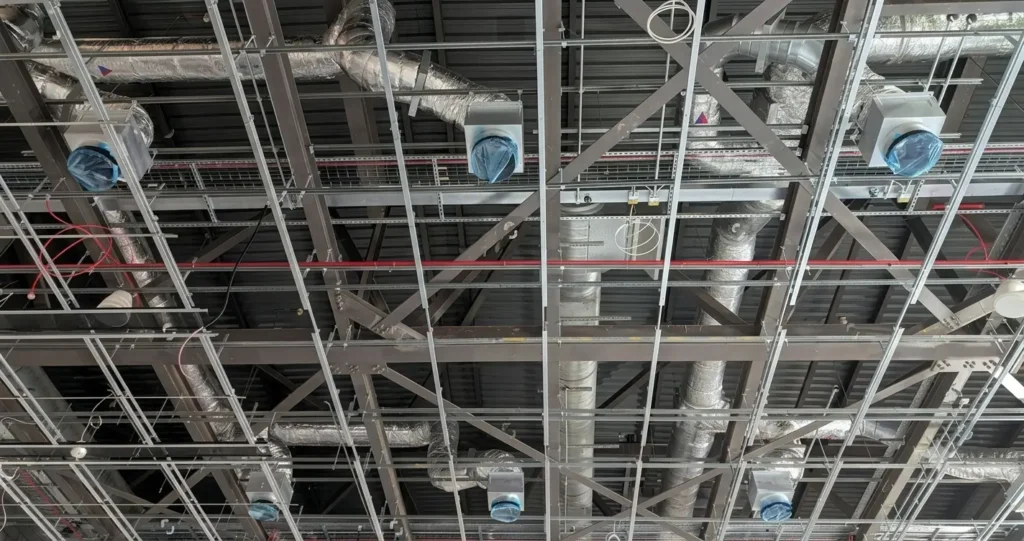
National MEP Design Firm Capability Matrix
To assist project developers in aligning their specific facility requirements with the appropriate engineering service provider, the table below compares the primary capabilities and target sectors of these leading firms:
| Engineering Service Provider | Key Target Industrial Sectors | Primary Specialized Engineering Competence | Digital Tools & Software Platforms Used | Best Suited Project Types |
| Jacobs Solutions | Advanced Manufacturing, Biopharma, Aerospace, Clean Energy | Lifecycle costing, digital twin simulations, integrated sustainable design intelligence | Revit, Navisworks, ACC, Nature Vista, BEM | Multi-billion-dollar industrial mega-projects and complex processing plants |
| Burns & McDonnell | Chemical Plants, Refineries, Aerospace, Food & Beverage | Heavy industrial process integration, ASME process piping, turnkey EPC project delivery | AutoCAD, Revit, specialized stress analysis tools | High-pressure, hazardous chemical processing, and turnkey design-build industrial installations |
| AECOM | Mega Logistics, High-Tech Manufacturing, Clean Energy, Rail | Information-rich BIM modeling, Computational Fluid Dynamics (CFD), multi-disciplinary design integration | Revit, Navisworks, CFD, EnergyPlus, openBIM | Complex logistics hubs, high-density automated warehouses, and large infrastructure projects |
| WSP USA | Advanced Manufacturing, Clean Tech, Decarbonization Projects | Whole lifecycle green building design, waste-heat recovery, microclimatic simulations | Revit, Rhino, Grasshopper, Ladybug, Honeybee | High-performance industrial facilities aiming for net-zero carbon operations or LEED certification |
| Syska Hennessy | Data Centers, Labs, Central Utility Plants, High-Tech Industrial | Critical system redundancy design (N+1, 2N), central energy plant optimization | Revit, Navisworks, energy simulation tools | Mission-critical manufacturing, semiconductor cleanrooms, and data center developments |
| IMEG Corp. | Advanced Automotive, Food Processing, General Manufacturing | Localized code compliance, comprehensive MEP/FP retrofitting, rapid-response tenant improvements | Revit, Navisworks, specialized energy modeling | Mid-to-large-scale manufacturing plant retrofits, equipment additions, and facility expansions |
Compliance, Safety Codes, and Hazardous Location Classifications
Industrial MEP design is strictly bounded by code compliance. When engineering mechanical, electrical, and plumbing systems for facilities handling volatile or explosive materials, engineers must strictly adhere to the hazardous location criteria defined by the National Electrical Code (NEC) Articles 500-505 and equivalent international standards (ATEX/IECEx).
Hazardous Area Classifications
To ensure electrical devices do not become ignition sources in volatile atmospheres, spaces are classified into distinct Categories and Probabilities:
- Class I Locations: Areas where flammable gases, vapors, or liquids are or may be present in quantities sufficient to produce explosive or ignitable mixtures (e.g., petroleum refineries, chemical storage areas).
- Class II Locations: Areas made hazardous by the presence of combustible dusts (e.g., grain elevators, coal processing plants, pharmaceutical powder processing).
- Class III Locations: Areas where easily ignitable fibers or flyings are present, but are not likely to be suspended in the air in quantities sufficient to produce ignitable mixtures (e.g., textile mills, wood processing facilities).
These classes are subdivided into Division 1 (where ignitable concentrations of hazards exist under normal operating conditions) and Division 2 (where hazards are only present under abnormal conditions, such as a pipe rupture or equipment failure).
A reliable MEP firm must design containment systems, explosion-proof conduit seals, and intrinsically safe electrical circuits to guarantee complete isolation of ignition-capable components from explosive media.
| NEC Classification | Representative Industrial Environment | Critical MEP Engineering Requirement |
| Class I, Division 1 | Fueling Hydrant Pits, Inside Fueling Vaults, Chemical Mixing Vats. | Explosion-proof (flameproof) electrical enclosures, mineral-insulated metal-sheathed cables, and specialized conduit seals. |
| Class I, Division 2 | Natural Gas Pipelines, Outdoor Insulated Pipe Joints, Paint Spray Booth Surrounds. | Non-incendive electrical components, hermetically sealed contacts, and robust structural isolation. |
| Class II, Division 1 | Grain Elevators, Coal Pulverizing Plants, Pharmaceutical Powder Blending Rooms. | Dust-ignition-proof enclosures, complete sealing to prevent combustible dust ingress, and surface temperature limiting. |
| Class II, Division 2 | Agricultural Feed Storage Facilities, Dry Starch Processing Warehouses. | Dust-tight enclosures, specialized non-ventilated motors, and strict electrostatic discharge grounding. |
Piping Stress Analysis and Mechanical Forces
In industrial process piping, fluid mechanics and thermal dynamics introduce immense forces into the structural framework of the building. Experienced MEP engineering firms conduct rigorous Piping Stress Analysis to ensure that piping systems can withstand all static, dynamic, and transient forces.
Engineers run detailed simulations calculating three distinct load profiles:
- Sustained Loads: Permanent, continuous loads caused by internal system pressure, self-weight of the pipe, fluid mass, and external insulation. These forces must be successfully transferred to the building structure through strategically placed hangers, anchors, and spring supports.
- Occasional Loads: Intermittent, short-duration forces arising from seismic activity, heavy wind loads, or severe internal transients such as water hammer. Water hammer calculations model the immense pressure spikes caused by rapid valve closures using the Joukowsky equation:
The relationship used to calculate the pressure change caused by a sudden change in fluid velocity (water hammer) is:
ΔP = ρ × c × Δv
Where:
ΔP = Change in pressure
ρ = Fluid density
c = Speed of sound in the fluid medium
Δv = Change in fluid velocity
- Expansion Loads: Thermal expansion and contraction resulting from the temperature differential between the initial installation state and extreme operating limits. To manage these thermal displacements without exceeding the allowable fatigue range of the material, engineers design flexible expansion loops, expansion joints, and sliding guide assemblies.
Importantly, the MEP design team must carefully model the Piping-Equipment Interface to ensure that residual loads transferred to sensitive equipment nozzles—such as high-pressure centrifugal pumps or steam turbines—remain well below the strict structural tolerances defined by standards like API 610.
To verify whether fluid velocity remains within safe limits to prevent cavitation and erosion inside these piping runs, design engineers calculate the dimensionless Reynolds Number The Reynolds number (Re) is used to monitor the transition from stable laminar flow to turbulent flow regimes:
Re = (ρ × v × D) / μ
Where:
Re = Reynolds number (dimensionless)
ρ = Fluid density
v = Mean fluid velocity
D = Internal diameter of the pipe
μ = Dynamic viscosity of the fluid
Building Information Modeling and Digital Integration in Industrial MEP
In the modern industrial construction landscape, physical coordination in the field is obsolete. Reliable MEP firms execute all design, coordination, and documentation within high-resolution, database-driven Building Information Modeling (BIM) environments.
Using collaborative platforms such as Autodesk Revit, Navisworks, and cloud-based Common Data Environments (CDE) like Autodesk Construction Cloud, engineers create highly accurate 3D representations of every mechanical run, conduit rack, structural column, and process pipeline. This allows the design team to run advanced, automated Clash Detection and Resolution processes.
Before any physical materials are ordered or fabricated, specialized software identifies “hard clashes” (physical intersections between components, such as a duct running through a structural steel beam) and “soft clashes” (violations of necessary clearance zones, such as blocking physical access pathways to control valves or failing to maintain electrical panel clearance codes).
Digital Twins and Operational Handover
A massive, secondary benefit of implementing a rigorous BIM strategy is the generation of a Digital Twin. Upon project completion, the asset owner is not merely handed physical keys and a stack of paper drawings. Instead, they inherit a data-rich, virtual model that integrates all physical asset attributes, maintenance schedules, manufacturer datasheets, and real-time sensor connections.
This BIM model interfaces directly with Computerized Maintenance Management Systems (CMMS) and Building Automation Systems (BAS), allowing facility operators to run predictive maintenance protocols, track energy consumption, and manage space and equipment changes over the entire lifecycle of the industrial facility.
Practical Case Studies in Modern Industrial MEP Design
Evaluating the real-world performance of MEP designs across various sectors demonstrates how advanced engineering directly supports product manufacturing, resource conservation, and energy efficiency.
Industrial Wastewater Process Optimization in Pharmaceuticals
In a pharmaceutical facility in the United Kingdom, design engineers were tasked with addressing complex, high-volume chemical wastewater generation. The facility required a system that could isolate and treat highly corrosive, pharmaceutical-laden effluent before discharge into municipal sewers.
By developing a customized, closed-loop chemical treatment and neutralization process, the engineering team designed an automated wastewater recovery facility. The implemented design enabled the manufacturer to eliminate approximately 80% of their total landfill waste and reduce overall waste treatment expenditures by 90%, while simultaneously increasing the factory’s active production capacity.
High-Volume Process Infrastructure in Food and Beverage
At a PepsiCo manufacturing and laboratory facility in Singapore, engineers designed highly complex industrial utility networks to support continuous production lines.
The scope of design required integrating advanced mechanical ventilation, highly structured process plumbing, high-capacity product loading docks, and FM Global-compliant automatic sprinkler systems across extensive square footage.
The engineering teams utilized clash-free 3D BIM modeling to coordinate the dense process piping runs alongside heavy-duty electrical distribution panels, ensuring zero operational downtime and complete compliance with local environmental health codes.
Geothermal and Mass Timber Integration in Advanced Research
The Temerty Discovery Centre project in Toronto represents a major advancement in the integration of sustainable structural design and advanced mechanical engineering. The 385,000-square-foot mental health research facility was engineered as a hybrid mass timber structure incorporating cross-laminated timber (CLT) concrete floor systems.
The mechanical design discarded traditional fossil-fuel heating and cooling systems, relying entirely on a highly efficient, deep geothermal field to regulate indoor ambient conditions. Through precise energy modeling and building envelope simulations, the engineering team achieved the strict criteria required for LEED v4 Platinum certification and Tier 3 Toronto Green standards, establishing a model for carbon-neutral laboratory operations.
Evaluation Framework for Selecting the Right Partner
To assist industrial facility developers and managers in identifying the most reliable MEP partner for their specific project profile, the following evaluation checklist represents the critical technical standards that must be verified during the Request for Proposal (RFP) process:
                       [ PROJECT OWNER RFP PIPELINE ]
                                     │
           ┌─────────────────────────┼─────────────────────────┐
           ▼                         ▼                         ▼
   [ EXPERIENCE ]             [ BIM WORKFLOW ]         [ ON-SITE SUPPORT ]
   • ASME B31.3 Piping        • ISO 19650 BEP          • Structural CA
   • NEC Hazardous            • 3D Hard Clashes        • Commissioning
   • Sector-Specific          • Digital Twins          • Handover Manuals
- ASME Code Experience: The prospective MEP firm must demonstrate in-house experience in ASME B31.3 Process Piping and ASME B31.1 Power Piping designs. Ask for sample drawings illustrating dynamic stress analysis, thermal loop calculations, and specialized pipe hanger placement schedules.
- Hazardous Location Qualifications: Review the firm’s history of designing Class I, Division 1 and 2 electrical installations. Ensure the design team includes certified professional engineers (PE) who specialize in NFPA and NEC compliance guidelines for volatile environments.
- Collaborative BIM Infrastructure: The firm must utilize an ISO 19650-compliant BIM Execution Plan (BEP). Verify their ability to deliver data-rich Revit models incorporating global standards (such as Arup’s Global Revit and Global Tekla Standards) that easily interface with asset management database platforms.
- Construction Administration & Commissioning Depth: Industrial MEP designs require intense field supervision. The contract must include robust Construction Administration (CA) services, field verification protocols, and dedicated third-party commissioning agents to oversee system testing and final handover.
Strategic Conclusions for Facility Managers
Selecting a reliable MEP engineering service for an industrial facility is a critical step in securing the long-term viability, safety, and efficiency of a project. The choice of provider must align with the specific technical complexity, hazard profile, and overall physical scale of the asset.
For mega-scale projects, process-heavy installations, and advanced biopharmaceutical gigafactories, utilizing multinational giants like Jacobs, AECOM, or Burns & McDonnell remains the industry standard. These organizations provide the deep resources, specialized chemical divisions, and advanced digital modeling capabilities required to coordinate complex industrial infrastructures safely.
For mission-critical environments where absolute power quality, microgrid stability, and system uptime are primary concerns, Syska Hennessy Group provides specialized engineering expertise.
Conversely, for light industrial facilities, regional logistics hubs, automated warehouses, or rapid-response manufacturing upgrades, utilizing highly agile partners like IMEG Corp. or specialized mid-market engineering firms offers a more flexible approach. These providers deliver direct principal involvement, fast permitting turnarounds, and highly customized layouts tailored to the localized demands of municipal utility networks and regional building codes.
By matching the technical needs of your manufacturing process with the specialized strengths of these categorized MEP engineering providers, industrial facility managers can safeguard their capital investment, ensure strict compliance with international safety codes, and maintain continuous, efficient operations throughout the life of the asset.