

Articles
7 Proven Frameworks: How to Structure an Engineering Organization for Scale

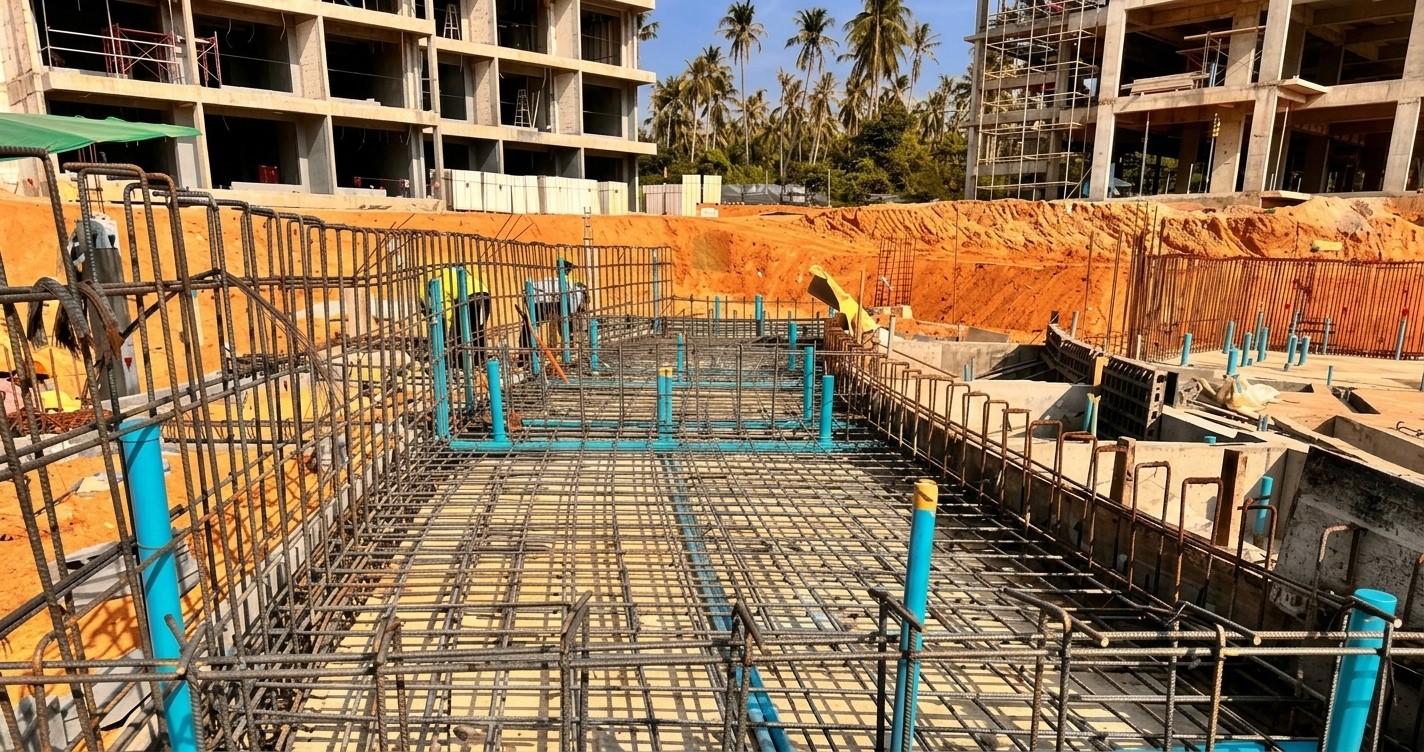
Understanding how to structure an engineering organization is the single most defining factor in whether a company can deliver complex
Table of Contents
Understanding how to structure an engineering organization is the single most defining factor in whether a company can deliver complex projects efficiently, retain top technical talent, and scale without friction. As technical systems grow in complexity—whether in software engineering, physical systems development, or infrastructure design—the way engineering teams are grouped, managed, and aligned directly impacts productivity and speed-to-market.
An engineering structure is far more than an organizational chart with lines and boxes. It represents your company’s communication pathways, decision-making velocity, and innovation capacity. Without a clear organizational blueprint, engineering teams fall into common traps: bloated management hierarchies, severe inter-team dependencies, excessive cognitive load, and burnout.
In this comprehensive guide, we will analyze modern organizational design principles, evaluate time-tested structural models, and provide an actionable framework for building a high-performing engineering organization at any scale.
Why Learning How to Structure an Engineering Organization Matters
Designing an organizational architecture is equivalent to designing system architecture. In fact, sociology and software engineering have proven that the two are inextricably linked.
1. Conway’s Law and System Design
Formulated by computer programmer Melvin Conway in 1967, Conway’s Law states that organizations design systems that mirror their internal communication structures. If an organization is divided into siloed, isolated departments, the products or systems it builds will exhibit clunky integration points and brittle dependencies.
Conversely, when learning how to structure an engineering organization
, forward-thinking leaders leverage the Reverse Conway Maneuver: they design team structures to match the desired modular architecture of their products.
2. Managing Cognitive Load
Cognitive load refers to the total amount of mental effort being used in the working memory. When an engineering team is forced to own too many domains, navigate complex deployment environments, and maintain legacy tools simultaneously, their effective capacity plummets.
A well-structured organization establishes clear boundaries, allowing engineers to focus deeply on their core domain rather than drowning in context switching.
3. Reducing Inter-Team Dependencies
The greatest bottleneck in modern engineering is not individual coding or CAD drafting speed; it is the delay caused when Team A must wait for Team B to deliver a dependency. Proper organizational design eliminates hard handoffs and replaces them with autonomous value streams, self-service platforms, and loose coupling.
5 Foundational Models: How to Structure an Engineering Organization
When evaluating how to structure an engineering organization, leadership must choose an operational baseline that aligns with their business goals, technical product scope, and company culture. Here are the five primary organizational models utilized across top technology and engineering firms.
1. Functional Structure (Specialty-Based Silos)
In a traditional functional structure, engineers are grouped exclusively by their technical discipline—for instance, all frontend developers report to a Frontend Manager, all backend developers report to a Backend Manager, and all electrical or mechanical engineers report to their respective department heads.
- Advantages: Deep domain expertise, strong peer mentorship, clear career paths within a specialized discipline, and standardized quality guidelines.
- Disadvantages: Slower project execution, heavy communication overhead across functional silos, and lack of end-to-end product ownership.
- Best For: Early-stage research teams, specialized consulting firms, or organizations with highly stable, non-rapidly changing products.
2. Matrix Organization (Dual Reporting Hierarchy)
The matrix structure attempts to combine functional excellence with project-based delivery. Engineers belong to a functional department (e.g., Civil, Mechanical, or Systems Engineering) but are assigned to multi-disciplinary project teams for daily work.
- Advantages: Flexible resource allocation, cross-project knowledge sharing, and strong technical oversight from functional managers.
- Disadvantages: Priority conflicts between project managers and functional managers, employee role ambiguity (“two bosses” problem), and administrative complexity.
- Best For: Large-scale engineering enterprises handling complex, time-bound client contracts or capital infrastructure projects.
3. Cross-Functional / Product-Led Teams (Pods & Squads)
In a product-led or stream-aligned structure, small, cross-functional teams (typically 5 to 9 people) are grouped around a specific user outcome, product feature, or business domain. A typical pod might include a Product Manager, UI/UX Designer, Lead Engineer, Frontend Engineers, Backend Engineers, and a Quality Assurance specialist.
- Advantages: Maximum autonomy, high speed-to-market, end-to-end accountability, and strong customer focus.
- Disadvantages: Potential duplication of effort across pods, risk of diverging technical standards, and weaker functional mentorship if managers are generalized.
- Best For: Fast-growing software companies, SaaS platforms, and agile digital product development.
4. The Spotify Model (Tribes, Squads, Chapters, & Guilds)
Popularized by Spotify’s engineering culture papers, this model refines the cross-functional pod structure by introducing horizontal alignment mechanisms:
- Advantages: Balances feature-delivery speed with domain governance; preserves technical standards across autonomous teams.
- Disadvantages: Frequently cargo-culted by companies without adapting the model to their unique operating context; high organizational matrix complexity.
- Best For: Mid-to-large technology organizations (100–1,000+ engineers) seeking a balance between speed and architectural coherence.
5. Networked / Distributed Architecture
In a networked engineering organization, core leadership sets high-level strategy and platform architecture, while execution is distributed across specialized internal teams and strategic external partners.
- Advantages: Extreme operational scalability, lower fixed overhead, access to specialized global talent on demand.
- Disadvantages: Requires rigid API contracts, precise documentation, and disciplined vendor management.
- Best For: Organizations managing complex multi-disciplinary hardware, software, or construction projects requiring specialized external engineering services.
Comparison of Engineering Organizational Models
| Organizational Model | Delivery Speed | Technical Standards | Autonomy | Operational Complexity | Ideal Organization Size |
| Functional Silos | Slow | Very High | Low | Low | 1 – 30 Engineers |
| Matrix Structure | Moderate | High | Moderate | High | 100 – 5,000+ Engineers |
| Cross-Functional Pods | Very Fast | Moderate | Very High | Low-Moderate | 20 – 200 Engineers |
| Spotify Framework | Fast | High | High | High | 100 – 1,000+ Engineers |
| Networked / Hybrid | Fast | Standardized | High | Moderate | Any Scale |
Applying Team Topologies: How to Structure an Engineering Organization for Flow
One of the most modern and influential frameworks for deciding how to structure an engineering organization is Team Topologies
, developed by Matthew Skelton and Manuel Pais. Rather than relying on rigid corporate hierarchies, Team Topologies classifies teams into Four Fundamental Team Types and defines Three Interaction Modes.
The Four Fundamental Team Types
1. Stream-Aligned Teams
A stream-aligned team is aligned to a continuous flow of work related to a specific business domain, product feature, or customer journey.They are fully cross-functional and possess end-to-end responsibility for delivering value directly to users.In a healthy engineering organization, 80% to 90% of teams should be stream-aligned.
2. Platform Teams
A platform team focuses on creating an internal “paved road”—a suite of self-service tools, infrastructure APIs, design systems, and deployment pipelines that reduce extraneous cognitive load for stream-aligned teams.Platform teams treat stream-aligned engineers as their internal customers.
3. Enabling Teams
Enabling teams consist of domain specialists in areas such as security, observability, build automation, or advanced UI testing.Rather than taking over work, an enabling team temporarily embeds with stream-aligned teams to build their skills, introduce best practices, and then disengages.Their motto is “teaching teams how to fish”.
4. Complicated-Subsystem Teams
When a part of the system demands extreme mathematical, scientific, or niche technical expertise—such as custom rendering engines, machine learning algorithms, or complex mathematical modeling—a complicated-subsystem team is formed to shield stream-aligned teams from overwhelming cognitive complexity.
The Three Team Interaction Modes
To prevent chaotic coordination, teams must explicitly operate under one of three interaction modes:
- Collaboration Mode:Two teams work closely together on a shared goal for a limited time to explore new technology or establish interfaces.
- X-as-a-Service Mode:One team provides a capability as a clean, documented, self-service API or component that another team consumes with minimal direct contact.
- Facilitating Mode:One team actively coaches and assists another team to clear roadblocks and acquire new skills.
Stage-by-Stage Guide: How to Structure an Engineering Organization
An organizational structure suitable for a 15-person startup will cause complete gridlock at 200 engineers. As your company grows, its structural topology must evolve systematically.
Stage 1: The Early Phase (1 to 10 Engineers)
- Structure: Single flat team or 2 informal pairings reporting directly to a CTO or Founding Engineer.
- Focus: Speed, rapid prototyping, direct customer interaction.
- Management Overhead: Near zero. Minimal formal processes, flexible roles, high bandwidth verbal communication.
- Key Risk: Technical debt accumulation and lack of architectural documentation.
Stage 2: The Growth Phase (10 to 50 Engineers)
- Structure: Transition into 3 to 6 cross-functional pods, each with 5–8 engineers. Introduce dedicated Engineering Managers (EMs) to handle 1:1s, career growth, and delivery tracking.
- Focus: Establishing predictable sprint cadences, defining product ownership boundaries, and introducing basic CI/CD pipelines.
- Management Overhead: 1 Engineering Manager per 6–8 engineers. 1 VP of Engineering or Head of Engineering overseeing EMs.
- Key Risk: Dependencies between pods causing release blockages.
Stage 3: The Scaleup Phase (50 to 250 Engineers)
- Structure: Group pods into business domain clusters or Tribes. Establish dedicated Platform Teams and Enabling Teams to handle developer tooling, infrastructure, and security.
- Focus: Managing cognitive load, standardizing core platform capabilities, establishing explicit architectural guardrails.
- Management Overhead: Multi-tier management: Directors of Engineering managing EMs, Staff/Principal Engineers overseeing architectural governance.
- Key Risk: Heavy coordination overhead, silo formation, and slowed delivery velocity.
Stage 4: The Enterprise Phase (250+ Engineers)
- Structure: Autonomous business units operating under a shared platform ecosystem. Widespread deployment of Team Topologies and API-first interaction modes.
- Focus: Global talent distribution, vendor/partner integration, governance, and long-term innovation streams.
- Management Overhead: Executive leadership (CTO, VP of Engineering, Chief Architect), Directors, Engineering Managers, and dedicated Staff/Principal tracks.
Integrating Specialist Divisions: How to Structure an Engineering Organization
While modern software organizations lean heavily on cross-functional software pods, engineering organizations in the physical world—such as building development, MEP (Mechanical, Electrical, and Plumbing), smart infrastructure, and hardware production—require precise integration between specialized technical divisions.
Systems Engineering
Engineering Partners
When learning how to structure an engineering organization that bridges physical infrastructure, building systems, and technology, leadership must balance internal core competencies with external technical partnerships.
Internal Core Competencies vs. Strategic Outsourcing
Not every engineering function needs to be maintained as an internal, full-time department. Organizations succeed by keeping core strategic product design in-house while partnering with specialized engineering organizations for niche domain execution.
For example, real estate developers, industrial project managers, and building technology companies often maintain lean internal management teams while leaning on specialized consultants for comprehensive technical execution:
- Building Infrastructure & Mechanical Systems: Successful project structures rely on dedicated MEP plan services to handle complex mechanical, electrical, and plumbing engineering documentation without overloading internal staff.
- Environmental & Climate Control Design: Integrating an optimized HVAC layout plan requires specialized thermal calculation expertise that is often most cost-effectively sourced through specialized engineering providers.
- Power Systems & Electrical Compliance: Navigating complex electrical codes, load schedules, and single-line diagrams demands dedicated electrical engineering services to ensure complete safety and regulatory compliance.
By integrating dedicated service organizations like EngrTeam
into your broader organizational workflow, your internal teams maintain high velocity and strategic focus while delivering fully compliant, multi-disciplinary engineering projects.
Key Metrics when Figuring Out How to Structure an Engineering Organization
How do you know if your engineering organizational structure is actually working? You must measure organizational health using objective data rather than guesswork.
- Deployment Frequency
- Change Lead Time
- MTTR
- Change Fail Rate
- Lead Time
- Cycle Time
- Flow Efficiency
- Dependency Bottlenecks
- Cognitive Load
- eNPS
- Retention
1. DORA Metrics (DevOps Research and Assessment)
- Deployment Frequency: How often does your organization successfully release code or engineering packages to production? High-performing organizations deliver small increments daily.
- Lead Time for Changes: How long does it take from code commit or design drafting to production deployment? Long lead times signal organizational handoffs and dependency bottlenecks.
- Mean Time to Restore (MTTR): How quickly can the team recover from a failure or system outage?
- Change Failure Rate: What percentage of releases cause a degradation or require immediate hotfixes?
2. Flow Metrics & Dependency Tracking
- Flow Efficiency: The ratio of active work time to total elapsed time. If a task takes 2 hours of actual work but spends 3 weeks waiting in queue for another team, your flow efficiency is under 5%.
- Dependency Count: Measure how many external team approvals or deliverables are required before a single team can ship value. High dependency counts indicate flawed team boundaries.
3. Qualitative Cognitive Load Assessments
Conduct quarterly team health pulses asking engineers to rate:
- Domain complexity (Is the system domain too broad?).
- Process complexity (Are internal deployment procedures or documentation steps frustrating?).
- Tooling friction (Do developer tools help or hinder daily work?).
Top 5 Pitfalls when Learning How to Structure an Engineering Organization
Avoiding common organizational design mistakes saves months of lost productivity, high attrition, and architectural rework.
1. Premature Optimization & Structural Over-Engineering
Structuring a 15-person engineering team like a 1,000-person enterprise creates crippling bureaucracy. Do not introduce complex Spotify Tribes or multi-tier management structures until operational scale demands it.
2. Neglecting Span of Control Ratios
An Engineering Manager overloaded with 12 to 15 direct reports cannot provide effective 1:1 mentorship, career development, or technical oversight. Maintain a healthy span of control ratio of 1:5 to 1:8 direct reports per manager.
3. Creating “Fake” Platform Teams
A common mistake is rebranding an understaffed sysadmin or IT maintenance group as a “Platform Team” without giving them a product mandate. A true Platform Team treats internal engineers as customers, builds intuitive self-service capabilities, and actively works to reduce cognitive friction.
4. Ignoring Career Ladders for Individual Contributors (ICs)
If the only way for senior engineers to advance their career is to transition into management, you risk losing your best technical architects or turning great engineers into unhappy managers. Establish a dual-ladder progression framework:
5. Overlooking Boundary Contracts Between Teams
When team ownership boundaries are vague, microservices and physical system components become ownerless orphan projects. Ensure every service, repository, or engineering deliverable has an explicit owner team bound by a clear Team API (documenting services provided, support channels, and SLAs).
Actionable Checklist: How to Structure an Engineering Organization
Follow this step-by-step strategic roadmap to audit and restructure your engineering organization for maximum efficiency:
- 1. Map Existing Value Streams & System Architecture
- 2. Audit Inter-Team Dependencies and Bottlenecks
- 3. Evaluate Team Cognitive Load via Quarterly Surveys
- 4. Classify Current Teams into Team Topologies Types
- 5. Define Explicit Team APIs and Interaction Modes
- 6. Establish Dual Career Tracks (IC vs Management)
- 7. Identify Core In-House vs Outsourced Specialist Functions
- 8. Track DORA & Flow Metrics to Measure Impact
- Map Your System Architecture and Value Streams: Identify the core business journeys and ensure your teams mirror those domains (Reverse Conway Maneuver).
- Audit Team Cognitive Load: Identify teams managing too many repositories, build tools, or domain responsibilities.
- Transition Component Teams into Platform or Stream-Aligned Units: Eliminate legacy “shared service” bottlenecks by providing self-service interfaces.
- Clarify Management vs IC Roles: Standardize career growth paths so technical leaders can drive architecture while managers focus on people development and team health.
- Establish External Engineering Partnerships: Partner with trusted multi-disciplinary experts like EngrTeam to handle complex building plans, electrical schematics, and mechanical layouts, allowing your core product engineers to stay laser-focused on market innovation.
Conclusion
Mastering how to structure an engineering organization is an ongoing, evolutionary process rather than a one-time project. As business priorities change, technical systems scale, and team sizes grow, your organizational topology must adapt dynamically.
By anchoring your organizational design in proven principles—such as minimizing inter-team dependencies, managing cognitive load through Team Topologies, maintaining optimal spans of control, and partnering with specialized technical experts—you create an environment where engineering teams operate with high autonomy, outstanding velocity, and sustainable long-term productivity.
Frequently Asked Questions (FAQ)
Q1: What is the best engineering team size for maximum productivity?
The most effective team size typically follows Amazon’s “Two-Pizza Rule”—generally 5 to 9 engineers. Teams larger than 10 people experience exponential increases in internal communication pathways ($N(N-1)/2$), leading to coordination fatigue and reduced velocity.
Q2: How do I transition from a functional silo structure to cross-functional pods?
Begin with a small, high-visibility pilot project. Form one cross-functional pod (comprising product, design, frontend, backend, and QA) focused on a single value stream. Measure velocity, team satisfaction, and deployment frequency before rolling out the structure across the broader organization.
Q3: What is the ideal ratio of Engineering Managers to Engineers?
A healthy ratio is 1 Engineering Manager to 6-8 Engineers. Ratios below 1:4 indicate excessive management overhead, while ratios above 1:10 leave managers stretched too thin to provide meaningful career guidance and 1:1 support.
Q4: How do external specialized engineering services fit into an engineering organization chart?
External engineering partners function best as specialized Complicated-Subsystem or Stream-Aligned Partners bound by explicit interfaces and deliverables. They allow core leadership to scale output rapidly without permanent management bloat.
Recent Posts
- 7 Proven Frameworks: How to Structure an Engineering Organization for Scale
- 10 Essential Benefits of MEP Coordination Drawing Services for Construction
- Power Distribution Centers Engineering: Design, Infrastructure, and Optimization
- Where Can I Find a Fast and Accurate HVAC Design Service for Permitting Purposes?
- HVAC load calculation service delivers: The Complete Engineering Guide to Sizing, Efficiency, and Code Compliance