

Articles

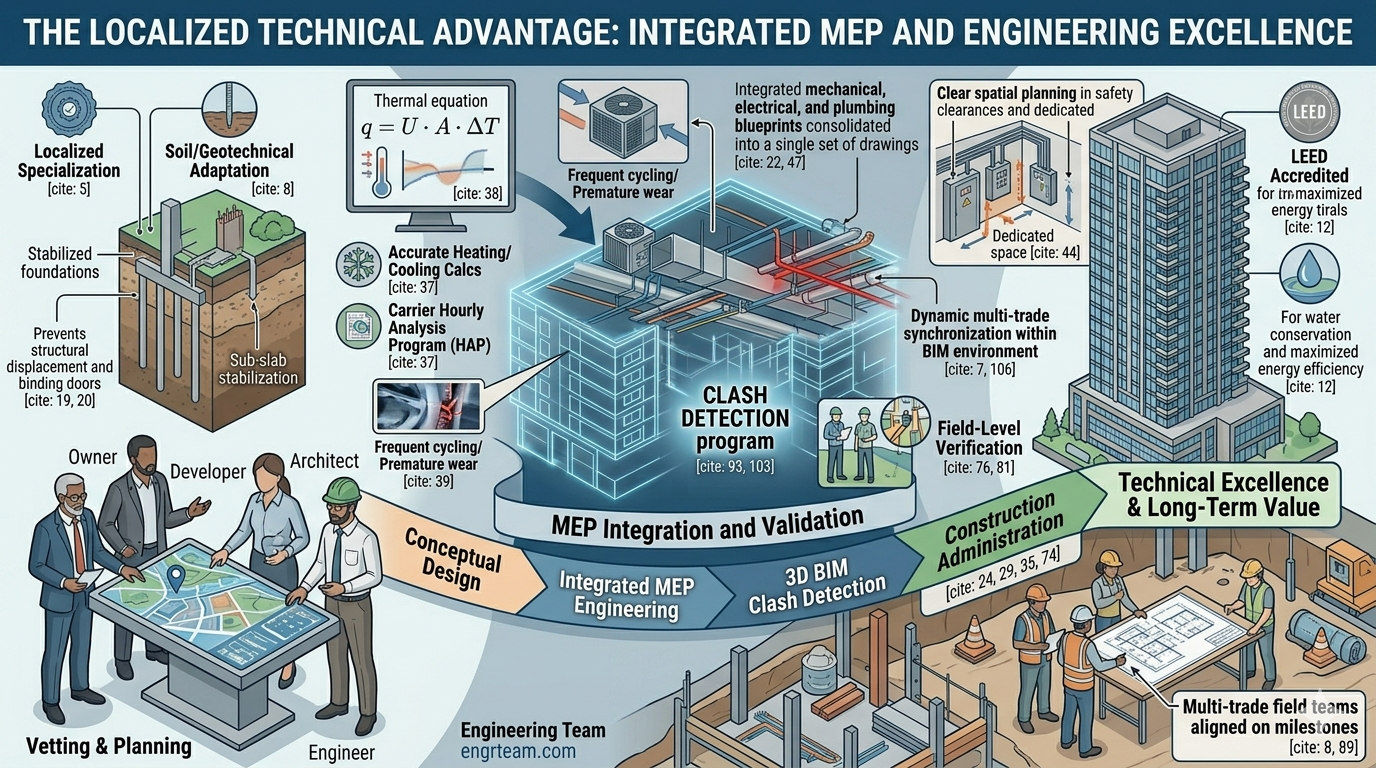
In contemporary commercial and high-density residential construction, selecting a highly qualified engineering firm is one of the most consequential decisions a developer, architect, or property owner can make. The engineering partner acts as the technical architect of a building’s internal infrastructure, ensuring that complex conceptual designs are translated into safe, functional, and highly efficient physical realities. Rather than functioning merely as isolated service providers, modern engineering firms collaborate with multidisciplinary design teams to navigate the intersection of structural integrity, municipal zoning laws, and international safety protocols.
When developers search for localized services using queries like “engineering firm near me,” their search intent extends far beyond geographical proximity. The true objective is to identify a partner with a deep understanding of local microclimates, regional soil behavior, state-specific building code amendments, and municipal permitting processes. Partnering with a localized engineering specialist ensures that design plans can be seamlessly approved, legally executed, and maintained without costly delays, regulatory fines, or operational disruptions.
Technical Vetting Frameworks for Local Engineering Partners
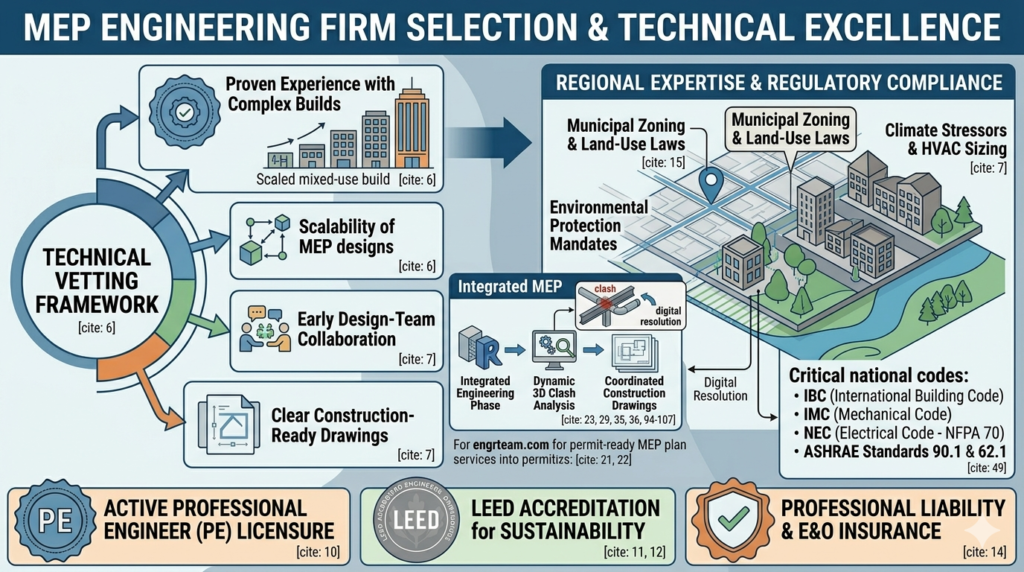
Identifying the most capable engineering firm within a specific geographical market requires an analytical framework that extends far beyond a simple comparison of service rates. Because structural and mechanical, electrical, and plumbing (MEP) systems represent the physical framework of any asset, prioritizing low-cost bids at the expense of engineering depth frequently leads to compounding operational challenges, structural deficiencies, and budget overruns.
| Selection Criteria | Core Engineering Focus | Technical Metrics & Deliverables | Long-Term Project Value |
| Proven Experience with Complex Builds | Scalability of integrated MEP designs for diverse, high-density asset classes. | Portfolio evidence of similar building configurations, mixed-use zoning, and industrial scales. | Prevents system under-sizing, spatial coordination failures, and inefficient operational footprints. |
| Clear Construction-Ready Drawings | Elimination of design ambiguities, logical system layouts, and precise equipment schedules. | Low volume of design-related Requests for Information (RFIs) and strict quality control checklists. | Drastically reduces construction-phase change orders, permitting delays, and field-level conflicts. |
| Early Design-Team Collaboration | Integration of structural, architectural, and MEP pathways during pre-construction modeling. | Dynamic multi-trade synchronization within Building Information Modeling (BIM) environments. | Mitigates spatial plenum collisions, optimizes structural framing, and coordinates utility service entries. |
| Regional Code & Climate Expertise | Mastery of municipal zoning, local utility demands, and localized climate stressors. | Compliance with regional building code amendments and localized microclimate HVAC sizing. | Speeds up permitting, eliminates environmental compliance fines, and optimizes local design parameters. |
| Speed, Responsiveness & Accountability | Fluid communication protocols and rapid resolution of field-level technical challenges. | Clear timelines, dedicated project managers, and guaranteed 24-hour RFI response windows. | Preserves construction schedule momentum and keeps multi-trade field teams aligned on milestones. |
| Structural Settlement Analysis | Foundations, load-bearing frames, and site-specific geological adaptation. | Detailed topographic, utility, and soil bearing capacity calculations to mitigate structural displacement. | Prevents foundation shifting, wall fissures, door binding, and long-term catastrophic structural decay. |
Essential Qualifications and Regulatory Accreditations
The baseline evaluation of any potential engineering partner must focus on structural qualifications and professional credentials. Academic credentials alone are insufficient; professional authority is established through continuous, hands-on experience in active construction environments. A qualified engineering team must demonstrate a minimum of a bachelor’s degree in engineering from an accredited institution, coupled with at least five years of verified field experience.
Furthermore, the engineers responsible for signing and sealing construction documents must hold active Professional Engineer (PE) licensures in the state where the project is situated. In a modern landscape where sustainability is directly tied to asset valuation, vetting professionals based on their Leadership in Energy and Environmental Design (LEED) accreditation is also highly recommended. LEED-accredited engineers are uniquely positioned to design building envelopes and active systems that reduce carbon emissions, promote water conservation, and maximize energy efficiency.
Mitigating Risk Through Professional Indemnity and Licensure
Beyond basic licensing, risk management is a vital component of the vetting process. Because structural and utility system designs dictate human life safety, even minor engineering oversights can trigger severe financial and legal liabilities. Consequently, developers must verify that their engineering partner carries robust Professional Liability Insurance, also known as Errors and Omissions (E&O) insurance, in addition to standard General Liability coverage.
Vetting these policies requires requesting active certificates of insurance and contacting the underwriting carriers to verify active coverage limits. A transparent engineering firm will readily supply these documents along with client references and concrete case studies, providing peace of mind that all structural calculations and system specifications are fully backed by professional indemnity.
Navigating Complex Municipal Zoning and Land-Use Laws
A highly qualified engineering firm must demonstrate a strong understanding of land-use laws, zoning restrictions, and environmental protection mandates. Municipal planning commissions constantly update density restrictions, setback rules, and environmental protections. An engineering firm lacking this localized understanding may produce designs that violate local zoning codes, causing major permitting delays and costly re-drafts.
Engineers must analyze dynamic regulatory variables such as:
- Local historical preservation guidelines and aesthetic overlay requirements.
- Protected ecological habitats, local wetlands, and regional soil conservation parameters.
- Floodplain designations, municipal storm run-off restrictions, and local stormwater management laws.
- Urban utility hookup capacities and local sewer discharge constraints.
Historical Soil, Hydrological, and Geotechnical Demands
Geotechnical variations are highly site-specific and dictate structural foundation parameters. Before structural design begins, engineering teams must evaluate local soil-bearing capacities, hydrological tables, and topographic variations. Working with a firm that has localized geographical experience prevents early design mistakes, particularly when dealing with expansive clays, shallow water tables, or unstable slopes.
Without this technical foresight, buildings may experience differential settlement, causing foundation cracks, wall fissures, uneven floors, and doors that bind in their frames. A local engineering partner will quickly identify these geological risks, specifying proper foundation systems—such as deep pile foundations, engineered structural fill, or localized sub-slab soil stabilization—to guarantee the long-term structural integrity of the project.
The Integration of Core MEP Disciplines in Modern Design
Modern building performance relies heavily on mechanical, electrical, and plumbing (MEP) systems. These systems act as the primary operational pathways of a structure, directly impacting occupant comfort, safety, and long-term energy use.
1. Architectural & Structural Analysis
Initial design review ensuring structural integrity and municipal code compliance.
2. Integrated MEP Design
Precision HVAC load calculations and advanced power distribution mapping.
3. 3D BIM Coordination
Virtual prototyping and automated clash detection to eliminate field rework.
4. Fabrication-Ready Documents
Detailed shop drawings optimized for off-site prefabrication and rapid install.
5. Smart Facility Operation
Lifecycle-centered maintenance powered by Digital Twins and IoT sensors.
Mechanical Engineering and Thermal Performance Calculations
Mechanical engineering manages indoor air quality, thermal comfort, and energy conservation. Rather than relying on inaccurate rule-of-thumb calculations, professional engineers perform rigorous heating and cooling calculations using industry-standard programs such as the Carrier Hourly Analysis Program (HAP). These calculations evaluate actual heat transfer through the building envelope, calculating thermal transmission via the following equation:
HVAC Thermal Load Calculation
q = Heat Transfer Rate (Measured in BTU/hr)
U = Heat Transfer Coefficient (Efficiency of building materials)
A = Surface Area (Total square footage of the building envelope)
ΔT = Temperature Difference (Difference between indoor and outdoor air)
*This engineering standard ensures HVAC systems are sized for maximum efficiency and comfort.
These thermal load analyses prevent the under-sizing or over-sizing of heating and cooling systems. Under-sized systems fail to maintain comfort during peak weather conditions, while over-sized equipment cycles frequently, leading to poor humidity control, premature system wear, and high energy bills.
Engineers evaluate variables such as:
- The orientation of the building, glazing specifications, and shading profiles.
- Occupant thermal loads and automated lighting power densities.
- Heat emitted by computers, kitchen appliances, and manufacturing equipment.
- Ventilation air exchange rates mandated by local health regulations.
Aerodynamic Air Distribution and Ductwork Topologies
Once the mechanical loads are calculated, the engineering team designs the physical air distribution pathways. Through precise ductwork plan design, engineers calculate duct sizer parameters, external static pressures, and air balance requirements. Poorly designed ductwork can create noisy draft conditions, restrict airflow, increase fan power consumption, and cause uneven temperature zones.
Engineers select duct configurations, damper systems, and air diffusers to ensure balanced airflow while meeting the space constraints of the ceiling plenum. These layouts must also include dedicated exhaust systems, kitchen ventilation systems, and outdoor air intakes to maintain healthy air quality and meet municipal safety standards.
Electrical Grid Infrastructure and Load Balancing
Electrical design serves as the primary energy pathway for modern commercial, industrial, and high-density residential developments. Designing robust and safe power distribution systems requires accurate load calculations, short-circuit current ratings, and voltage drop limits. Registered engineers design the complete electrical layout, choosing appropriate main distribution boards, panelboards, transformers, and transfer switches to ensure continuous operational uptime.
In addition to primary power, electrical design integrates:
- Architectural lighting layouts and automated daylighting controls.
- Dedicated emergency power generation and Uninterruptible Power Supply (UPS) systems.
- Grounding networks, lightning protection, and fault-current paths.
- Space planning for main electrical rooms to satisfy physical safety clearances.
Plumbing Engineering and Fire Suppression Integrity
Hydronic and plumbing designs ensure the sanitary delivery of clean water and the efficient disposal of storm and wastewater. Engineers conduct detailed plumbing demand calculations, choosing energy-efficient water heaters, sizing sanitary sewer networks, and integrating backflow preventer systems to protect municipal water lines.
Simultaneously, fire safety requires the seamless integration of engineered fire protection systems. This includes automatic wet and dry pipe sprinkler systems designed in compliance with NFPA standards, high-capacity fire pumps, and fire alarm notification systems. Comprehensive MEP plan services unify mechanical, electrical, and plumbing blueprints into a single coordinated package. This approach prevents physical conflicts in the ceiling plenum, streamlines the municipal permitting process, and keeps the construction schedule on track.
Navigating the Interlocking Web of National and Local Building Codes
Engineering compliance requires navigating a complex, interlocking ecosystem of national model codes, regional standard references, and localized amendments. In the United States, the International Code Council (ICC) publishes the foundational model codes, which are subsequently adopted and modified by state and local municipalities.
| Regulatory Code / Standard | Governing Organization | Primary Engineering Focus | Critical Design & Compliance Impact |
| IBC (International Building Code) | International Code Council (ICC) | General building design, occupant safety, and structural integrity. | Serves as the primary umbrella code that triggers when specific systems, such as fire sprinklers or emergency lighting, are legally required. |
| IMC (International Mechanical Code) | International Code Council (ICC) | Ventilation, mechanical exhaust, and thermal systems. | Establishes safety parameters for mechanical installations, ductwork construction, and refrigeration equipment placement. |
| NFPA 70 (National Electrical Code – NEC) | National Fire Protection Association (NFPA) | Safe electrical design, installation, and materials. | Dictates absolute safety requirements for panel spacing, wiring methods, grounding, and system overload protection. |
| NFPA 13 | National Fire Protection Association (NFPA) | Automatic fire sprinkler system layout and design. | Mandates water flow rate calculations, pipe sizing, sprinkler head coverage rules, and physical clearance parameters. |
| ASHRAE Standard 90.1 | ASHRAE / IES / USGBC | Energy efficiency baselines for commercial structures. | Establishes the regulatory baseline for building lighting power allowances, motor efficiencies, and thermal envelope performance. |
| ASHRAE Standard 62.1 | ASHRAE | Minimum indoor air quality and ventilation rates. | Calculates required outdoor air volume distribution based on space occupancy, usage, and environmental variables. |
| IECC (International Energy Conservation Code) | International Code Council (ICC) | Comprehensive commercial and residential energy savings. | Establishes minimum envelope performance and HVAC mechanical efficiency metrics, offering prescriptive or performance compliance options. |
Understanding Prescriptive versus Performance-Based Paths
Engineering designs must demonstrate compliance with energy conservation codes using either a prescriptive or performance-based methodology. The prescriptive compliance path mandates strict adherence to established threshold tables, dictating maximum allowable lighting power densities, specific building envelope R-values, and minimum equipment efficiencies. While straightforward, this rigid approach limits architectural freedom.
Conversely, the performance-based approach—frequently executed via comprehensive computer energy modeling—demonstrates compliance by proving that the proposed building’s overall annual energy consumption will be equal to or less than a standard reference building. This methodology allows engineering firms to optimize budgets, using high-efficiency HVAC equipment to balance structural or architectural envelope limitations.
Regulatory Standards and Multi-Agency Coordination Challenges
A major challenge in MEP design is coordinating multiple overlapping codes. For example, the International Building Code (IBC) might establish when a fire protection system is required, while the National Fire Protection Association (NFPA) dictates how to design that system. Similarly, a mechanical room design must simultaneously meet the mechanical safety rules of the International Mechanical Code (IMC), the electrical safety clearances of the National Electrical Code (NEC/NFPA 70), and the thermal standards of ASHRAE.
To resolve these conflicts, engineering teams must work collaboratively during the early planning stages. They must identify and reconcile competing rules—such as balancing egress widths with equipment access clearances—long before final blueprints are submitted for municipal permit reviews.
Quality Management Protocols and Construction Administration
In large-scale commercial constructions, minor drawing errors or uncoordinated schematics can lead to field conflicts, construction delays, and expensive contractor change orders. High-quality engineering firms reject the notion that change orders are a normal part of doing business. Instead, they apply strict internal quality management protocols that start during initial schematic design and continue through to final system commissioning.
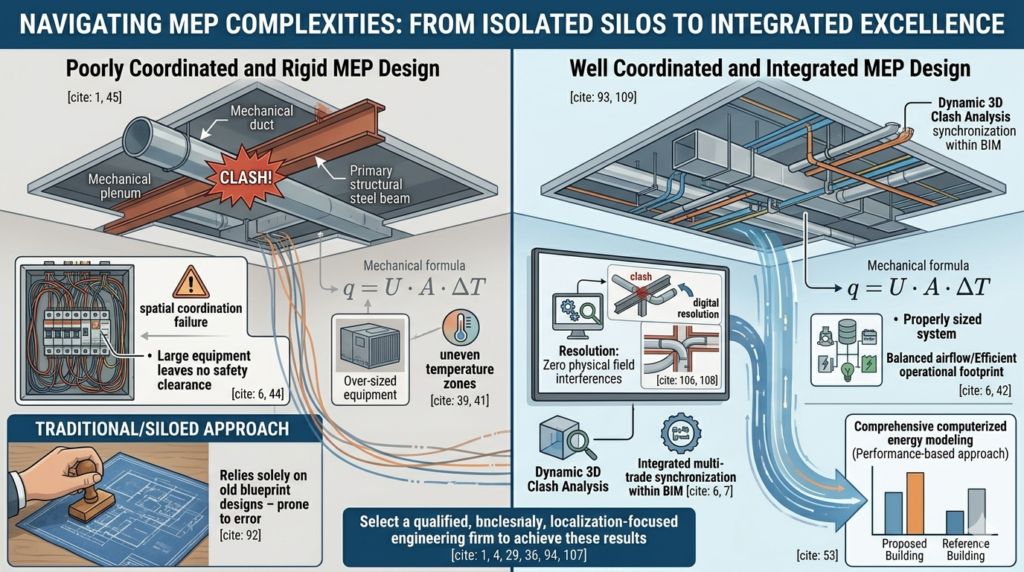
True quality control involves much more than a final drawing review before submittal. It requires a continuous, active process that begins during the initial proposal phase. For renovations and retrofits, engineers must conduct detailed site visits to verify actual physical conditions, rather than relying solely on old blueprint designs.
Physical site visits allow engineers to:
- Inspect above-ceiling plenums to identify structural framing obstructions, existing utility trunks, and routing constraints.
- Verify that the architectural shell drawings match physical dimensions.
- Assess existing electrical service equipment capacities and check utility hookup points.
- Prevent structural conflicts by identifying utility pathways before construction crews arrive.
Leveraging Advanced Digital Prototyping and Clash Detection
Modern engineering firms avoid spatial conflicts in the field by utilizing advanced 3D Building Information Modeling (BIM) platforms like Autodesk Revit. These tools allow mechanical, electrical, plumbing, and structural models to be combined into a single, cohesive digital prototype.
Using clash-detection software like Navisworks, the design team can identify and resolve physical interferences before construction begins. For example, a conflict where a main supply duct intersects a structural steel beam can be easily resolved in the digital model by rerouting the ductwork or adjusting structural openings. Resolving these issues digitally prevents expensive field corrections, keeps construction moving forward, and ensures the project stays on schedule and within budget.
The Strategic Integration of Local SEO and Digital Authority
In today’s digital landscape, local SEO is a highly effective strategy for engineering firms to build their commercial client base. Commercial buyers, municipal developers, and architectural partners are cautious, deliberate decision-makers who conduct thorough online research before initiating contact. Ranking for high-intent search terms like “MEP engineering firm near me” establishes an engineering firm’s digital authority right where prospective clients are looking.
| Buying Committee Role | Core Project Apprehensions | Target Search Behaviors | Key Conversion Drivers |
| Owner / Developer | Construction cost overruns, permitting delays, and operational risks. | “EPC firm with proven track record,” “design-build contractor near me”. | Project case studies, clear schedule guarantees, and risk-mitigation plans. |
| General Contractor / EPC | Labor capacity limits, safety incidents, and construction delays. | “MEP prefabrication contractor,” “modular construction partner”. | Complete technical drawings, strong safety records, and clear team capacity. |
| Architect / Design Lead | System specification errors, code compliance issues, and spatial conflicts. | “3D BIM coordination designer,” “DFMA engineering expert”. | Advanced technical expertise, software capability, and code-compliance history. |
| Procurement Specialist | Vendor financial risk and contract compliance issues. | “Licensed commercial engineering consultant,” “insured MEP firm”. | Professional liability insurance limits, clear fee structures, and references. |
Unlike temporary paid advertising, a strong local SEO presence provides long-term, compounding value. Each optimized project page, local case study, client review, and professional directory listing strengthens the firm’s online footprint. This ongoing visibility establishes digital trust, ensuring that when local decision-makers are ready to select an engineering partner, they find a reputable, qualified firm.
Frequently Asked Questions
How do localized environmental factors influence structural and MEP engineering designs?
Localized environmental factors—such as temperature extremes, humidity levels, local soil chemistry, and seismic activity—profoundly affect engineering designs. For example, coastal projects require corrosion-resistant mechanical equipment and specialized wind-load tie-downs. Similarly, areas with high-clay soils require robust foundation engineering, and cold climates mandate dry-pipe fire sprinkler systems to prevent freezing. Selecting an engineering partner with local experience ensures your systems are designed to withstand these localized environmental stresses.
What is the difference between prescriptive and performance-based energy code compliance?
A prescriptive compliance path is a straightforward approach where each building component must meet specific minimum standards outlined in code tables, such as minimum R-values for wall insulation or maximum lighting power densities. The performance path utilizes advanced energy modeling software to analyze the entire building’s energy consumption as an integrated system. This performance approach allows for greater design flexibility, letting engineers use high-efficiency HVAC equipment to compensate for larger glass facades or other architectural constraints.
How do engineering firms proactively minimize construction change orders?
Firms minimize change orders by conducting thorough, design-phase site visits to confirm physical dimensions and identify hidden structural constraints, rather than relying on outdated as-built drawings. Additionally, using advanced 3D BIM coordination tools like Revit allows engineers to run clash detection analyses. This identifies and resolves physical conflicts—such as a large duct running through a structural steel beam—long before the drawings reach the field.
Why is early coordination between structural, architectural, and MEP systems critical?
Early coordination ensures that the building’s physical envelope, structural framework, and internal utility networks work in harmony. If MEP systems are engineered late in the process, developers are often forced to lower ceiling heights, add expensive structural supports, or redesign entire layouts to accommodate bulky mechanical equipment and electrical panels. Early interdisciplinary collaboration eliminates these issues, saving both time and money.
What credentials and certifications should a reputable MEP engineering firm possess?
At a minimum, the firm’s lead engineers must hold active Professional Engineer (PE) licenses in the state where the project is located. Additionally, the firm should carry comprehensive Professional Liability (Errors & Omissions) and General Liability insurance. For high-performance, sustainable, or specialized projects, developers should look for credentials like LEED AP or mission-critical certifications such as CDCP® or ATP.