

Articles

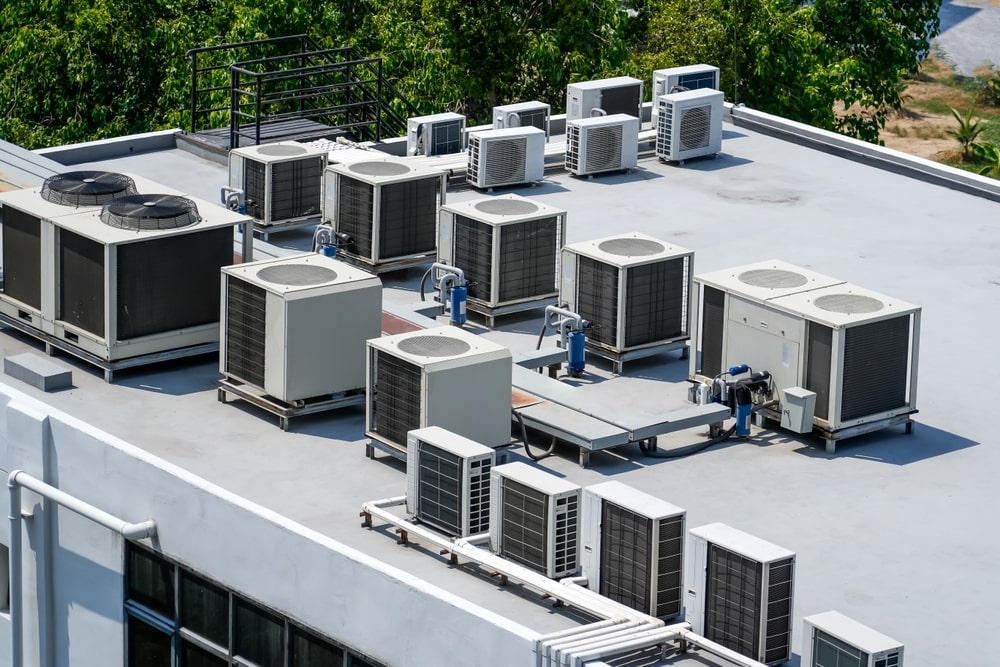
Commercial MEP solutions in the Caribbean constitute the essential engineering framework required to support high-performance, climate-resilient, and economically viable building operations throughout the tropical island region. Designing mechanical, electrical, and plumbing (MEP) systems for commercial real estate across CARICOM member states presents an extraordinary combination of environmental and operational challenges. Tropical island geography exposes building infrastructure to high atmospheric relative humidity, elevated year-round ambient temperatures, aggressive solar radiation, airborne chloride corrosion, and extreme weather events, including Saffir-Simpson Category 3 to 5 hurricanes. Concurrently, commercial property owners face heavy financial burdens driven by regional energy economics, where more than 95% of electricity generation relies on imported fossil fuels, resulting in commercial electricity tariffs between $0.30 and $0.55 per kilowatt-hour (kWh).
To safeguard capital investments, maintain operational continuity, and ensure asset durability, commercial developments—including luxury hospitality resorts, modern corporate towers, healthcare facilities, retail complexes, and logistics centers—require specialized engineering methodologies. These systems must balance strict energy conservation mandates with aggressive structural resilience standards. The widespread regional adoption of modern regulatory frameworks, such as the CARICOM Regional Energy Efficiency Building Code (CREEBC) and the Caribbean Uniform Building Code (CUBiC), has transformed baseline expectations for commercial building performance. Consequently, advanced MEP engineering is no longer treated as a simple utility installation, but as the primary strategic driver of a commercial facility’s operational efficiency, disaster survivability, and long-term valuation.
The Strategic Value of Commercial MEP Solutions in the Caribbean
Commercial MEP solutions in the Caribbean must be engineered through the dual lenses of extreme energy efficiency and life-cycle durability. Standard off-the-shelf equipment and conventional engineering paradigms designed for temperate mainland climates routinely fail when deployed in tropical island environments. Premature equipment degradation, unmanageable indoor humidity levels, excessive energy consumption, and structural failures during severe weather events are typical outcomes of unadapted building systems.
The economic reality of the Caribbean demands an aggressive focus on energy performance. In island economies where utility generation relies heavily on imported heavy fuel oil and diesel, baseline electricity expenditure represents the single largest controllable operating expense for commercial properties. Under these conditions, an inefficient HVAC or lighting system directly erodes net operating income (NOI) and reduces asset value. Furthermore, regional climate vulnerability requires commercial facilities to operate as self-sustaining centers of resilience during grid disruptions caused by natural disasters or power distribution failures. A integrated MEP framework combines low-energy mechanical demand, onsite renewable power generation, energy storage, and resilient water networks into a unified operational strategy.
Regulatory Frameworks Governing Commercial MEP Solutions in the Caribbean
The regulatory landscape governing commercial building construction in the Caribbean has advanced rapidly to promote sustainability, lower national reliance on imported oil, and enforce structural safety standards. The primary regulatory driver for energy performance across the region is the CARICOM Regional Energy Efficiency Building Code (CREEBC). Developed under the direction of the CARICOM Regional Organisation for Standards and Quality (CROSQ) in collaboration with the CARICOM Energy Unit, the Caribbean Centre for Renewable Energy and Energy Efficiency (CCREEE), the International Code Council (ICC), and ASHRAE, the CREEBC establishes mandatory minimum energy efficiency provisions tailored specifically to tropical marine environments.
The commercial scope of the CREEBC applies to all non-residential structures as well as multi-family residential buildings exceeding three stories in height. Adapted from the International Energy Conservation Code (IECC 2018) and ASHRAE Standard 90.1-2016, the code establishes comprehensive standards for building envelope performance, indoor air conditioning, mechanical ventilation, pumping efficiency, interior and exterior illumination, and service water heating systems. Complementing the CREEBC are Regional Minimum Energy Performance Standards (MEPS) and the structural parameters of the Caribbean Uniform Building Code (CUBiC), which governs wind load resistances and mechanical equipment anchoring to withstand extreme hurricane conditions.
| Regulatory Baseline / Standard | Technical Scope & Purview | Primary Focus in Commercial MEP Engineering | Regional Operational Impact |
| CREEBC (Commercial Provisions)[cite: 3, 7] | Non-residential & residential structures > 3 stories | Envelope SHGC, VRF/Chiller efficiency, LPD, Pumping power | Mandates energy conservation over complete building lifecycle |
| ASHRAE Standard 90.1-2016[cite: 4, 6] | Commercial building energy performance | Mechanical system baseline efficiencies, digital controls | Forms core thermal/HVAC technical baseline within CREEBC |
| IECC 2018 (Tropical Adaptation)[cite: 3, 6] | Energy conservation code framework | Prescriptive & performance paths for lighting and envelope | Establishes international compliance structure for CARICOM |
| CUBiC (Part 2, Section 2)[cite: 5, 9] | Wind load design and structural integrity | Equipment tie-downs, louver ratings, seismic/wind anchorage | Guarantees mechanical survivability during Category 5 storms |
| Regional MEPS (CARICOM/CROSQ)[cite: 8] | Public and commercial building systems | Appliance, chiller, and motor minimum efficiency ratings | Prevents importation of obsolete, low-efficiency equipment |
Advanced HVAC Strategies for Tropical Island Architectures
Heating, Ventilation, and Air Conditioning (HVAC) systems constitute the largest electrical load in Caribbean commercial buildings, frequently accounting for 55% to 70% of total facility energy consumption. The tropical marine climate presents continuous psychrometric challenges: ambient dry-bulb temperatures range between 28°C and 34°C (82°F to 93°F), accompanied by high wet-bulb temperatures and dew points consistently exceeding 24°C (75°F). Managing high latent cooling loads—the thermal energy required to remove moisture from outdoor air—is critical to maintaining healthy indoor air quality (IAQ) and preventing interior mold proliferation, material decay, and structural rot.
Psychrometric Load Decoupling and Dedicated Outdoor Air Systems
Standard constant-volume or variable air volume (VAV) air handling systems struggle in humid tropical environments because they attempt to process sensible loads (temperature) and latent loads (humidity) simultaneously through a single cooling coil. When indoor sensible heat drops, system controls throttle air flow or raise coil temperatures, causing supply air humidity to rise and driving space relative humidity above acceptable thresholds (greater than 60%). Modern commercial HVAC design relies on completely decoupling latent cooling from sensible cooling.
Dedicated Outdoor Air Systems (DOAS) are deployed to handle 100% of the ventilation air requirement. The DOAS unit sub-cools incoming fresh air below its dew point—frequently down to 10°C–12°C (50°F–54°F)—to condense out moisture before delivering dry air to the interior. Energy Recovery Ventilators (ERVs) equipped with enthalpy wheels pre-cool and pre-dehumidify incoming outdoor air using the cool, dry exhaust air leaving the building, reducing primary ventilation cooling loads by up to 30%. Sensible cooling within individual zones is then handled efficiently using localized variable refrigerant flow (VRF) fan coils, chilled water air handlers, or passive hydronic chilled beams. Implementing these advanced thermodynamic configurations requires specialized expertise in HVAC system design services to ensure precise load matching and long-term psychrometric stability.
Chilled Water Systems vs. Variable Refrigerant Flow Topologies
Selecting the primary cooling architecture depends on property scale, space usage, and load profiles. Central chilled water plants are ideal for commercial properties exceeding 100,000 square feet, such as resort campuses, healthcare facilities, and office towers. Utilizing oil-free, magnetic-bearing centrifugal chillers operating within Variable Primary Flow (VPF) loops permits exceptional full-load and part-load efficiency. When combined with variable frequency drives (VFDs) on pumps and cooling tower fans, plant efficiency can reach 0.50 to 0.55 kW/ton under typical operating conditions.
For small-to-medium commercial developments, such as retail centers, boutique hotels, and mid-rise office spaces, heat-recovery Variable Refrigerant Flow (VRF) systems offer granular zone control and high energy efficiency. Heat-recovery VRF systems capture heat rejected from conditioned spaces requiring cooling and redirect it to zones requiring heating or to domestic hot water pre-heating systems, maximizing total thermodynamic efficiency.
Atmospheric Corrosion Mitigation in Coastal Environments
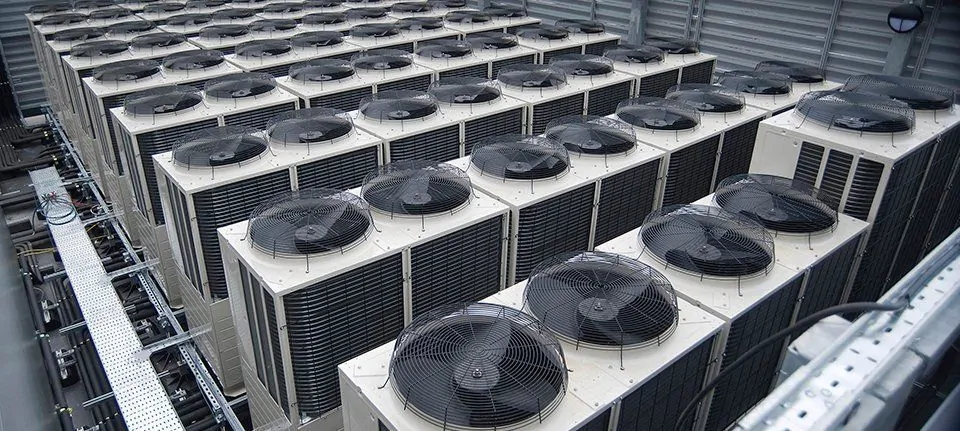
High concentrations of airborne sodium chloride in coastal island environments accelerate galvanic and pitting corrosion on exterior mechanical infrastructure. Unprotected aluminum condenser fins, copper coils, and steel casings experience rapid structural degradation, often failing within 18 to 36 months of installation. This degradation leads to refrigerant leaks, compromised heat transfer, elevated operating pressures, and premature system failure.
Comprehensive corrosion protection protocols require:
- Cathodically electro-deposited epoxy coatings (E-coat) applied to all cooling coils, providing complete metallic coverage without creating thermal insulation barriers, tested to endure over 10,000 hours of continuous salt spray exposure per ASTM B117 standards.
- Equipment enclosures, fan assemblies, and structural frames manufactured from 316-grade stainless steel or marine-grade aluminum finished with architectural polyester powder coatings.
- Positioning air-cooled equipment in protected building micro-environments and installing protective architectural louvers to eliminate direct contact with prevailing sea breezes and salt spray.
Resilient Electrical Infrastructure and Renewable Power Systems
Electrical engineering for commercial properties in the Caribbean must address two main challenges: persistent utility power quality fluctuations and high electricity rates. Commercial facilities must incorporate robust power conditioning equipment, emergency backup systems, and localized microgrid capabilities to guarantee uninterrupted operational continuity.
Power Quality, Microgrids, and Battery Energy Storage
Island electricity networks frequently experience voltage sags, frequency deviations, transient surges, and rolling outages due to limited generation margins and weather disruptions. Sensitive commercial digital electronics, building management systems (BMS), and variable frequency drives require comprehensive electrical protection.
Commercial service entrances must incorporate Category C Transient Voltage Surge Suppressors (TVSS) combined with Active Harmonic Filters (AHF) to suppress voltage spikes and mitigate harmonic distortion generated by non-linear electrical loads. Critical commercial operations—such as hospitality reservation servers, financial data centers, and life-safety systems—rely on central online double-conversion Uninterruptible Power Supply (UPS) units that deliver isolated, continuous power with zero transfer time during grid outages.
To lower baseline energy costs, commercial facilities are increasingly integrating rooftop solar photovoltaic (PV) arrays with Lithium Iron Phosphate (LFP) Battery Energy Storage Systems (BESS). Microgrid controllers manage energy distribution in real time, storing excess solar generation during daytime hours and discharging stored battery energy during peak utility tariff windows. This dynamic peak shaving strategy reduces peak demand charges and lowers monthly electrical expenditure.
CREEBC Standards for Electrical Lighting and Controls
CREEBC Commercial Provisions mandate strict Lighting Power Density (LPD) limits across interior and exterior commercial spaces. Achieving compliance requires high-efficiency solid-state LED fixtures combined with advanced lighting automation systems:
- Occupancy and Vacancy Sensors: Mandatory in commercial offices, conference rooms, utility spaces, and hospitality guestrooms to automatically turn off lighting when spaces are unoccupied.
- Daylight Harvesting Controls: Continuous dimming photocells deployed within daylight zones (within 15 feet of exterior windows or skylights) that adjust artificial lighting output based on natural ambient daylight.
- Exterior Lighting Automation: Astronomical time-clocks and daylight sensors that shut off exterior architectural, landscape, and parking lot lighting during daylight hours.
Sustainable Plumbing, Water Management, and Wastewater Recycling
Freshwater scarcity is a significant operational challenge across many Caribbean island nations. Numerous jurisdictions rely on energy-intensive seawater reverse osmosis (SWRO) desalination facilities, leading to high municipal water tariffs. Commercial plumbing design must manage water as a high-value asset through rainwater harvesting, air conditioning condensate recovery, greywater recycling, and high-efficiency fixture specification.
HVAC Condensate Recovery and Rainwater Harvesting
Commercial air conditioning systems operating in high-humidity tropical climates extract substantial volumes of moisture from outdoor air. A 100,000-square-foot commercial office facility in the Caribbean generates between 5,000 and 12,000 gallons of high-purity condensate water daily during peak cooling periods.
Rather than routing this water into municipal sewers, engineered plumbing systems capture condensate through dedicated collection networks. The harvested condensate is routed through particulate filtration and ultraviolet (UV) disinfection systems before being directed to cooling tower makeup tanks or non-potable storage reservoirs. Because AC condensate contains minimal dissolved solids, its use as cooling tower makeup water significantly reduces mineral scaling, lowers chemical treatment needs, and decreases overall water consumption.
Rainwater harvesting systems collect rainfall from commercial roof decks through specialized catchment networks. Collected rainwater passes through first-flush diverters and multi-stage disc filters into concrete storage cisterns. Pressurized distribution systems then supply treated rainwater for non-potable commercial applications, including toilet flushing, cooling towers, and subsurface landscape irrigation.
Water Conservation Fixtures and Thermal Energy Integration
To comply with regional sustainability guidelines and CREEBC service water heating mandates, plumbing specifications must minimize baseline consumption while optimizing domestic hot water (DHW) production:
- Ultra-Low-Flow Sanitary Fixtures: Installing sensor-activated lavatory faucets rated at 0.35 GPM (gallons per minute), dual-flush 1.1/1.6 GPF water closets, and high-efficiency 0.125 GPF or waterless urinals.
- Solar Thermal Water Heating: Utilizing flat-plate or evacuated-tube solar thermal arrays connected to insulated storage vessels to provide pre-heated water for commercial laundries, kitchens, and hotel guestrooms.
- Heat Pump Water Heaters (HPWH): Deploying air-source heat pump water heaters in commercial kitchens and mechanical spaces. Heat pump water heaters capture waste heat from surrounding spaces—providing supplementary cooling—while producing domestic hot water at a Coefficient of Performance (COP) exceeding 3.5.
Wind Load Resilience and Extreme Event Survivability
Ensuring the survivability of mechanical, electrical, and plumbing infrastructure during Category 4 and 5 hurricanes is a core engineering requirement under the Caribbean Uniform Building Code (CUBiC). Exterior building systems—including rooftop air handlers, chillers, cooling towers, exhaust fans, standby generators, and solar PV arrays—represent primary structural points of vulnerability during high-wind events.
Rooftop Equipment Structural Anchorage and Vibration Isolation
High-velocity winds create extreme uplift forces, lateral shear loads, and overturning moments on rooftop mechanical assets. CUBiC wind load design protocols require mechanical anchorages engineered to withstand ultimate wind speeds exceeding 160 to 180 mph, depending on regional island wind classifications.
Commercial equipment must be bolted directly to engineered concrete equipment curbs or through-bolted to structural steel framing anchored into the building’s primary structural deck. Friction-based or ballast-supported mounting frameworks are unsuitable for high-wind island locations. Additionally, spring vibration isolators supporting chillers and cooling towers must incorporate heavy-duty, cast-steel all-directional wind snubbers. These snubbers isolate equipment vibration during normal operations while mechanically securing components during high-wind conditions.
Rooftop solar PV installations require aerodynamic wind deflectors, low tilt profiles (typically 10 to 15 degrees), heavy-duty aluminum racking systems, and high-tensile stainless steel anchor fasteners engineered using boundary-layer wind tunnel modeling to prevent panel detachment during severe storms.
Envelope Penetrations and Storm Protection
Penetrations through the commercial building envelope for ductwork, piping, and electrical conduits must maintain watertight and wind-tight integrity during extreme weather events:
- AMCA 550-Rated Wind-Driven Rain Louvers: Fresh air intakes and exhaust openings must feature louvers certified under AMCA Standard 550 (High Velocity Wind Driven Rain Resistance). These louvers incorporate internal vertical blade profiles that reject wind-driven rain, preventing water ingress during severe storms.
- Motorized Heavy-Duty Storm Isolation Dampers: Spring-return motorized dampers installed behind fresh air intake louvers automatically close upon loss of utility power or system shutdown, preventing wind-driven rain from entering mechanical ductwork and damaging interior spaces.
Designers seeking further regulatory guidance on tropical building envelope integrations and energy efficiency standards can review official International Code Council CREEBC resources for detailed code documentation.
Lifecycle Cost Analysis and Economic Impact of High-Efficiency MEP
Although high-efficiency, corrosion-resistant, and hurricane-hardened MEP equipment requires a higher initial capital expenditure (CapEx), the high energy tariffs and demanding operating conditions in the Caribbean deliver fast payback periods and strong net present values (NPV).
A lifecycle cost analysis comparing a standard commercial MEP configuration with an advanced, CREEBC-compliant high-efficiency design highlights the long-term financial advantages over a 20-year operational period.
| Financial & Technical Performance Metric | Standard Baseline Commercial System | High-Efficiency CREEBC-Compliant System | Operational Advantage & Variance |
| Initial Capital Expenditure (CapEx) | Baseline ($100 / sq ft) | $112 / sq ft (+12%) | Premium covers E-coating, DOAS, BESS, & CUBiC mounts |
| Average Utility Electricity Rate | $0.42 / kWh | $0.42 / kWh | Standard commercial tariff across Caribbean region |
| Annual Electricity Consumption (100k sq ft) | 2,800,000 kWh / year | 1,450,000 kWh / year | 48.2% total reduction in annual energy usage[cite: 2] |
| Annual Operating Electricity Expenditure | $1,176,000 / year | $609,000 / year | $567,000 direct annual utility cost savings |
| Major Equipment Replacement Interval | 7 to 9 years (Corrosion failure) | 15 to 20 years (Marine-grade protection) | Prevents premature capital equipment replacement |
| Simple Capital Payback Period | Baseline | 2.12 Years | Rapid CapEx amortization driven by energy tariffs |
| 20-Year Net Present Value (NPV @ 8% discount) | Baseline | +$4,820,000 | Substantial boost to total commercial property value |
| Internal Rate of Return (IRR) | Baseline | 38.4% | Exceeds standard commercial real estate investment hurdles |
The financial data demonstrates that investing in high-performance commercial MEP solutions yields exceptional financial returns in island markets. Operational savings directly increase Net Operating Income (NOI), strengthening commercial asset valuations and improving debt coverage ratios. Furthermore, international multilateral institutions—including the World Bank, the Global Environment Facility (GEF), and the Caribbean Development Bank (CDB)—provide specialized green financing instruments and reduced interest rate loans for commercial facilities designed in full compliance with CREEBC guidelines.
Strategic Implementation Framework for Caribbean Commercial Projects
Successfully delivering a commercial real estate project in the Caribbean requires an organized execution strategy that accounts for regional supply chains, technical commissioning requirements, and long-term maintenance capabilities.
Integrated Design Process and BIM Coordination
Commercial projects must start with an Integrated Design Process (IDP) that aligns mechanical, electrical, plumbing, and structural engineering disciplines during the preliminary concept stage. Utilizing Building Information Modeling (BIM) at Level of Development (LOD) 350 to 400 allows project teams to perform 3D clash detection, verifying that mechanical ductwork, piping networks, and electrical conduits fit within designated structural clearances. Computerized energy modeling following ASHRAE 90.1 Appendix G protocols ensures full compliance with CREEBC efficiency performance targets prior to permit filing.
Equipment Procurement and Marine Specifications
Island logistics require advance procurement planning and strict factory quality control. Equipment purchase orders must explicitly specify factory-applied coil coatings, marine-grade metal enclosures, high-efficiency motor drivers, and tropicalized electrical insulation. Purchasing agents must verify that vibration isolators, structural curbs, and louver assemblies carry direct engineering documentation proving compliance with CUBiC high-velocity wind load requirements.
System Commissioning and Operational Integration
Comprehensive third-party commissioning (Cx) is essential to ensure systems operate as designed in tropical environments. Commissioning agents oversee rigorous functional testing protocols prior to building occupancy:
- Verification of DOAS sub-cooling and dynamic dehumidification performance under peak ambient humidity conditions, ensuring positive indoor building pressurization (+15 to +25 Pascals).
- Full load transfer testing, simulating utility power outages to confirm seamless emergency generator start-up, online UPS performance, and solar PV/BESS microgrid control transition.
- Calibration of all temperature, humidity, carbon dioxide ($CO_2$), and differential pressure sensors linked to the central Building Management System (BMS).
Facility Maintenance Programs and Workforce Training
Long-term system efficiency relies on well-trained facility management teams. Commercial developers should prioritize operational training programs aligned with CROSQ and ICC Commercial Energy Inspector certification standards. Scheduled maintenance programs must incorporate preventive care tailored to marine environments, including periodic coil flushing with neutral pH cleaners to remove salt buildup, continuous cooling tower water chemistry management to prevent scale accumulation, and thermographic scans of electrical switchgear to detect thermal anomalies before component failure occurs.
Conclusion
Developing resilient, energy-efficient, and financially viable commercial real estate across the Caribbean requires specialized building engineering methodologies. Commercial facilities operating in tropical island environments face a combination of extreme humidity, active atmospheric salt corrosion, hurricane risks, and high utility costs driven by imported fossil fuels. Implementing tailored MEP engineering practices aligned with modern regional standards—specifically the CARICOM Regional Energy Efficiency Building Code (CREEBC) and the Caribbean Uniform Building Code (CUBiC)—provides a proven pathway to overcome these operational challenges.
By utilizing advanced mechanical latent load decoupling, electro-coated heat recovery systems, resilient microgrid power designs, rainwater and condensate recycling networks, and hurricane-hardened equipment anchorages, commercial property owners can lower operating costs, ensure business continuity during natural disasters, and protect long-term asset value. Modern commercial MEP engineering transforms essential utility infrastructure into a primary strategic driver of energy efficiency, structural durability, and economic performance across the Caribbean built environment.