

Articles

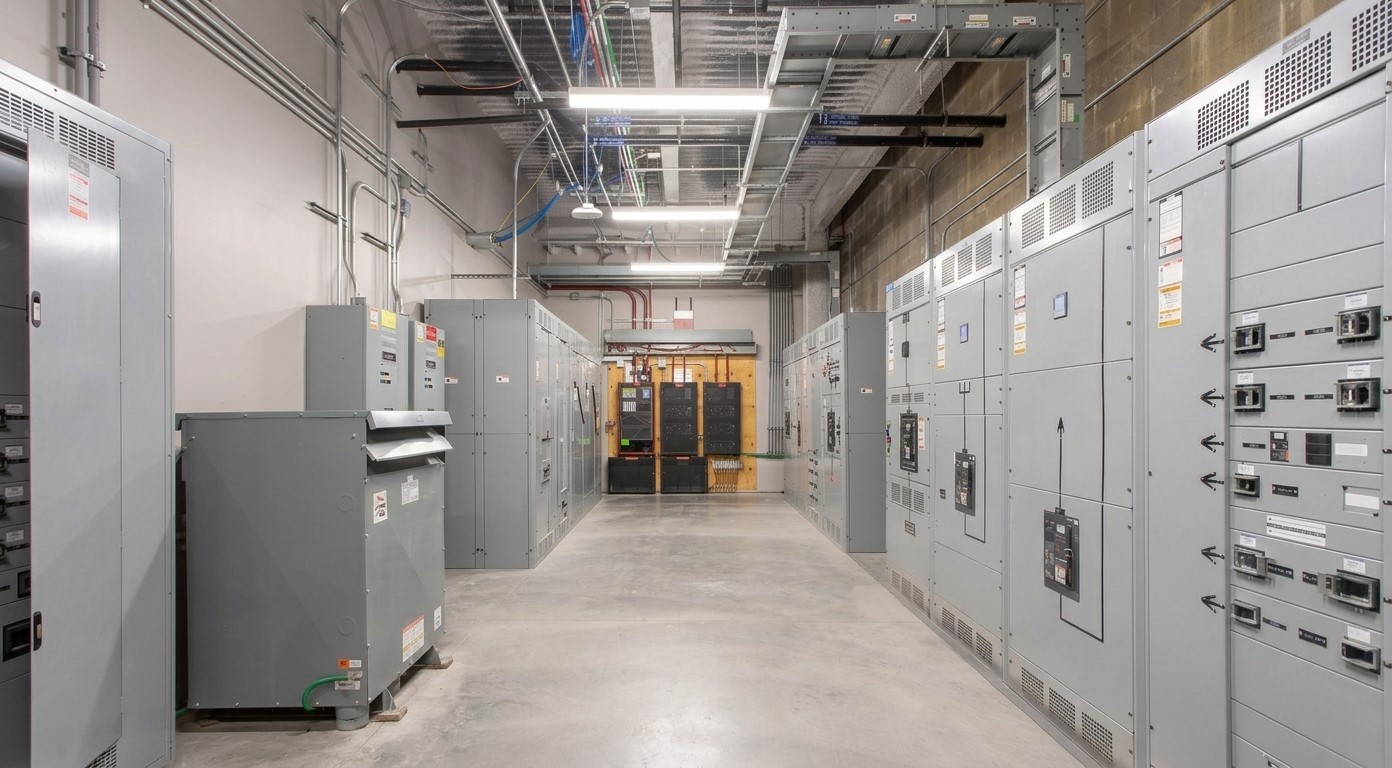
Determining which MEP engineering companies specialize in sustainable building designs requires evaluating technical capabilities, decarbonization frameworks, and empirical project performance. Mechanical, Electrical, and Plumbing (MEP) systems represent the core operational backbone of modern real estate. As global municipal codes enforce stringent operational energy caps and climate imperatives demand deep reductions in embodied carbon, building services engineering has evolved far beyond traditional equipment layout and basic code compliance. Modern green building design demands a complete convergence of building physics, thermodynamic optimization, renewable energy generation, circular hydrology, and advanced computational modeling.
Globally, the built environment accounts for approximately 39% of energy-related carbon emissions. Operational energy—specifically heating, cooling, ventilation, and lighting—constitutes roughly 28%, while the remaining 11% stems from embodied carbon locked within construction materials and building service infrastructure. Consequently, property developers, architects, and institutional directors increasingly rely on specialized consulting firms capable of authoring high-performance MEP plan services that synchronize active mechanical hardware with passive architectural envelopes.
Technical Pillars of Sustainable MEP Engineering
Evaluating whether an engineering practice genuinely specializes in low-carbon, regenerative building design requires looking past surface-level efficiency claims. Leading engineering consultancies incorporate five fundamental technical pillars into their design workflows:
- Operational Decarbonization: Transitioning building heating and cooling plants away from fossil-fuel combustion toward all-electric configurations powered by high-efficiency heat pumps, energy recovery ventilation (ERV), variable refrigerant flow (VRF) systems, and dynamic control networks.
- Embodied Carbon Management: Active participation in industry decarbonization commitments, most notably the MEP 2040 Challenge, which mandates net-zero operational carbon by 2030 and net-zero embodied carbon in MEP equipment by 2040. This requires carrying out Whole-Life Carbon Assessments (WLCA) and specifying materials backed by Environmental Product Declarations (EPDs).
- Circular Hydrology & Water Conservation: Implementing closed-loop water infrastructure, including rainwater collection and purification, greywater recycling, blackwater treatment, and ultra-low-flow public health fixtures to achieve site water neutrality.
- Indoor Environmental Quality (IEQ) & Biophilic Health: Optimizing human well-being through high-efficiency particulate air filtration, dynamic daylight harvesting, demand-controlled ventilation (DCV), continuous air-quality monitoring, and non-toxic material choices that avoid Red List chemicals.
- Computational Optimization & Building Physics: Deploying Building Information Modeling (BIM), Computational Fluid Dynamics (CFD), dynamic thermal modeling, and artificial intelligence algorithms to optimize material distribution, lower static pressure losses, and shrink equipment footprints.
| Architectural Vector | Traditional MEP Engineering Practice | Sustainable & Regenerative MEP Engineering |
| Primary Design Objective | Minimal first-cost expenditure and standard baseline compliance | Lifecycle financial value, net-zero carbon, and occupant health |
| Space Heating & Cooling | Natural gas/oil combustion boilers and centralized chillers | All-electric heat pumps, VRF loops, geothermal heat sinks, and DOAS |
| Water Infrastructure | Linear municipal supply intake and direct sewer discharge | Closed-loop greywater/blackwater recycling and rainwater harvesting |
| Carbon Accounting | Unmeasured or neglected operational carbon footprint | Comprehensive operational and MEP equipment embodied carbon tracking |
| Workflows & Modeling | Sequential, late-stage engineering layout behind architecture | Integrated early-stage building physics and dynamic thermal modeling |
| System Optimization | Rule-of-thumb safety margins resulting in oversized plant equipment | Generative AI routing, BIM coordination, and CFD airflow optimization |
Primary Global MEP Engineering Companies Specialize in Sustainable Building Designs
A select group of international consulting engineering practices has earned a global reputation for pushing the boundaries of green building performance. These firms regularly deliver projects achieving the highest tiers of environmental certifications, including LEED Platinum, the Living Building Challenge, Passivhaus, and BREEAM Outstanding.
PAE Consulting Engineers
PAE stands among the top-tier specialized MEP engineering firms dedicated to ultra-high-performance and net-zero building systems. Headquartered in the Pacific Northwest with a major footprint across North America, the firm generated roughly $70 million in West Coast revenue in 2025, driven heavily by sustainable infrastructure consulting. PAE is a founding signatory of the MEP 2040 Challenge and operates a proprietary internal embodied-carbon calculation tool designed specifically to quantify the life-cycle material impacts of mechanical equipment, piping runs, and electrical distribution systems.
The engineering firm has engineered several of the world’s most recognizable Living Buildings certified under the International Living Future Institute’s (ILFI) Living Building Challenge standard. A premier example of their capability is the PAE Living Building in Portland, Oregon. The 58,000-square-foot commercial office building produces 110% of its annual energy demands on-site through a 133-kW rooftop photovoltaic array integrated with a localized PV-powered battery energy storage system (BESS). The building features advanced closed-loop water systems that capture rainwater for full potable reuse, alongside vacuum flush toilets and urine-diversion infrastructure. High-performance operable glass wall systems integrate directly with the building management controls, supplying natural ventilation and passive cooling for 70% of the upper floor and producing an 80% operational energy savings over standard office facilities.
In addition to its flagship headquarters, PAE engineered the MEP systems for Seattle’s Bullitt Center, the Kendeda Building for Innovative Sustainable Design at Georgia Tech, and the Rocky Mountain Institute Innovation Center.
Glumac (A Tetra Tech Company)
Operating as a core practice within Tetra Tech’s High-Performance Buildings Group, Glumac brings more than five decades of specialized experience in sustainable MEP engineering, energy modeling, and building performance analytics. The consultancy structures its design methodologies around a triple-bottom-line framework—simultaneously prioritizing People, Planet, and Profit—to deliver resilient, net-zero energy and net-zero water facility designs.
Glumac seamlessly fuses mechanical, electrical, and plumbing engineering with specialized in-house commissioning, architectural lighting, and building technology groups. Utilizing Autodesk BIM 360 environments, the firm conducts early-phase energy modeling and daylighting analysis to refine envelope-to-plant interactions before finalizing equipment sizes. Their project portfolio includes major public, healthcare, and corporate facilities across North America, including the Oregon State Treasury and the First Tech Credit Union Headquarters—one of the continent’s premier commercial mass-timber developments.
Buro Happold
Buro Happold is an internationally recognized, multidisciplinary engineering consulting practice renowned for solving complex structural, environmental, and building services challenges. The firm excels in urban master planning, high-rise commercial decarbonization, and low-carbon institutional research facilities.
Buro Happold routinely demonstrates how integrated building services engineering can achieve drastic reductions in both operational and embodied carbon. On the landmark Amy Gutmann Hall project at the University of Pennsylvania, Buro Happold integrated complex MEP service networks within mass-timber structural frames. This cross-disciplinary approach decreased the structure’s embodied carbon footprint by 52% compared to equivalent concrete structures and 41% compared to structural steel.
Across civic and institutional projects worldwide, Buro Happold designs low-carbon district heating networks, industrial-scale heat recovery pumps, rooftop solar installations, dynamic facade controls, and green roof infrastructure aligned with international performance standards such as BNB Silver, LEED Platinum, and BREEAM Outstanding.
Atelier Ten
Atelier Ten functions as both an environmental design consultancy and a dedicated building services engineering practice, specializing in strategies that reduce the ecological footprint of built structures. The firm operates at the intersection of architecture, microclimate analysis, thermal dynamics, and mechanical system design.
Pioneering low-carbon design through their “Roadmaps to Absolute Zero Carbon,” Atelier Ten prioritizes passive environmental architecture over energy-intensive mechanical conditioning. By assessing solar radiation, air movement, thermal mass, and daylight harvesting during early conceptual design, they minimize baseline heating and cooling loads. Atelier Ten has delivered comprehensive environmental and engineering strategies for major cultural landmarks, including the Obama Presidential Center and the Theodore Roosevelt Presidential Library.
Interface Engineering and Mazzetti
- Interface Engineering: Founded in 1969 and fully employee-owned through an ESOP, Interface Engineering provides comprehensive MEP, fire protection, lighting, and commissioning services. The practice maintains a strong record in high-performance building design, showcasing deep technical expertise in Passivhaus commercial standards, net-zero energy networks, and low-impact public health engineering.
- Mazzetti: Operating as an employee-owned Benefit Corporation, Mazzetti specializes in healthcare engineering and technology consulting. Healthcare environments present unique decarbonization hurdles due to strict air-exchange mandates, continuous 24/7 operating schedules, and critical life-safety requirements. Mazzetti applies sustainable engineering principles to lower the energy use intensity (EUI) of acute care facilities without compromising clinical standards.
Schnackel Engineers
Schnackel Engineers approaches sustainable building design by deploying advanced, proprietary AI-driven design tools. The firm’s platform automates the routing, sizing, and balancing of electrical branch circuits, plumbing pipes, and HVAC ductwork networks.
By employing mathematical optimization algorithms to plot distribution paths, Schnackel systematically reduces total material quantities—and consequently the embodied carbon—associated with copper conductors, steel conduit, aluminum ductwork, and piping systems. Simultaneously, the optimized routing minimizes static pressure losses in air systems and fluid friction in hydronic piping, reducing fan and pump power draw throughout the operating life of the asset. The firm offers full certification management for LEED, WELL, and GreenPoint programs.
Regional Consultancies Advancing Low-Carbon Design
While global engineering consultancies lead multi-million-dollar developments, specialized regional engineering practices play an equally vital role in applying sustainable MEP engineering to regional developments, commercial retrofits, and civic facilities.
REMARS
Based in the United Kingdom, REMARS provides complete mechanical, electrical, and plumbing consulting engineering, energy modeling, and detailed BIM coordination. The firm specializes in delivering low-carbon heating, ventilation, and power distribution systems across commercial, multi-residential, industrial, healthcare, and energy sectors.
REMARS specializes in converting legacy fossil-fuel heating plants into modern low-carbon configurations. Their technical services include:
- Mechanical Ventilation with Heat Recovery (MVHR) and natural ventilation design.
- Ground-Source Heat Pump (GSHP) and Air-Source Heat Pump (ASHP) integrations.
- Variable Refrigerant Volume/Flow (VRV/VRF) systems.
- Solar thermal systems, solar photovoltaics (PV), and biomass heating systems.
- Building Information Modeling (BIM), energy audits, and dynamic energy simulations paired with BREEAM and LEED consulting.
BSE 3D
Operating out of the Midlands and supporting projects across the UK, BSE 3D delivers building services engineering, environmental physics, and energy consultancy services. The firm works alongside developers, architectural teams, and facilities managers to evaluate building fabric efficiency alongside mechanical systems.
Through dynamic thermal modeling and environmental simulations, BSE 3D assists building owners in lowering energy use intensity, meeting statutory performance targets, and reducing carbon footprints. Their work spans commercial office retrofits, educational campuses, healthcare facilities, and residential schemes, with a focus on integrated, low-carbon engineering.
Barker Associates, CPW, and JPA M&E Consultants
- Barker Associates: Operating across commercial, residential, and educational sectors, Barker Associates combines MEP engineering with low-carbon consultancy and dynamic thermal modeling. Their mechanical and electrical engineers align building envelope thermal efficiency with plant sizing, incorporating rooftop PV installations, high-efficiency LED illumination, and smart energy controls.
- CPW (CPW Practices): CPW is an environmental building services consultancy focused on sustainable MEP engineering and low-carbon design across the UK. The firm specializes in lowering carbon intensity through low-energy heating networks, daylight optimization, and passive environmental controls.
- JPA M&E Consultants: JPA M&E delivers mechanical, electrical, and public health design consultancy alongside energy management services, including Part L compliance assessments, Energy Performance Certificates (EPCs), and building physics evaluations across commercial real estate.
When upgrading or specifying specialized building services, leveraging focused HVAC system design services allows design teams to evaluate psychrometric performance, seasonal efficiency metrics, and equipment footprint options prior to installation.
Engineering Solutions and Technical Methodologies Driving Decarbonization
Achieving net-zero operational carbon requires MEP engineers to deploy advanced technical solutions across mechanical, electrical, plumbing, and digital modeling disciplines.
Electrification and Advanced Thermal Management Infrastructure
Eliminating fossil-fuel combustion on-site requires replacing natural gas boilers and steam networks with all-electric central utility plants:
- Centralized Heat Pump Systems: Deploying air-to-water and water-to-water heat pump networks capable of simultaneous heating and cooling extraction. Modern installations utilize heat recovery chillers that capture rejected heat from cooling loops and boost it to temperatures suitable for domestic hot water and hydronic space heating.
- Coefficient of Performance (COP) Optimization: Electrified thermodynamic performance is governed by the Coefficient of Performance (COP), defined as:
- COP = Qthermal / Welectrical
- Where Qthermal represents the useful thermal energy delivered or extracted, and Welectrical represents the electrical energy consumed. Advanced sustainable MEP systems maintain seasonal performance factors (SPF) exceeding 3.5 to 4.5, vastly outperforming high-efficiency gas boilers (COP ≤ 0.95).
- Dedicated Outdoor Air Systems (DOAS): Decoupling space conditioning (sensible heat loads) from ventilation air delivery (latent moisture loads). DOAS units incorporate total energy recovery wheels (enthalpy wheels) that exchange sensible heat and moisture between exhaust and fresh air streams, recovering up to 80% of lost thermal energy.
- Low-GWP Refrigerant Selection: Transitioning away from high-Global Warming Potential hydrofluorocarbons (HFCs) like R-410A (GWP ≈ 2,088) toward hydrofluoroolefins (HFOs) and natural refrigerants, such as CO₂ (R-744, GWP = 1) and propane (R-290, GWP = 3).
Circular Hydrology and Water Engineering
Water conservation directly reduces energy consumption, as municipal water extraction, treatment, and distribution require substantial electrical grid energy:
- Membrane Bioreactor (MBR) Greywater Recycling: Collecting wastewater from lavatories, showers, and laundry equipment, processing it through submerged MBR filtration units and UV disinfection, and recirculating it for non-potable demands such as toilet flushing and cooling tower makeup.
- Potable Rainwater Harvesting: Directing roof runoff through vortex pre-filters into underground storage cisterns. Firms like PAE engineer multi-barrier treatment trains (coarse filtration, activated carbon, micro-filtration membranes, and UV sterilization) to meet drinking water safety standards under the Living Building Challenge framework.
- Vacuum Drainage Infrastructure: Replacing gravity-fed drainage with vacuum flush fixtures, cutting water consumption from a standard 1.28 gallons per flush (4.8 liters) down to 0.13 to 0.26 gallons per flush (0.5 to 1.0 liters).
Digital Twins, AI Optimization, and Embodied Carbon Modeling
Sustainable MEP practices use computational modeling to bridge the gap between initial design intent and long-term operating performance:
- Computational Fluid Dynamics (CFD): Simulating three-dimensional airflow, air age, thermal stratification, and pollutant concentration profiles in complex spaces—such as high-ceiling atriums, cleanrooms, and laboratories—to optimize air diffuser positioning and reduce airflow volumes.
- Generative AI Distribution Routing: Deploying algorithmic tools to generate optimized, clash-free paths for ductwork, piping, and conduit networks. This approach reduces friction loss, lowers static pressure demands, cuts raw copper and steel consumption, and reduces embodied carbon.
- Whole-Life Carbon Assessments (WLCA): Quantifying the embodied carbon locked within MEP materials, including duct insulation, copper wiring, transformer cores, structural supports, and synthetic refrigerants. Engineers utilize EPDs to select lower-carbon equipment, supporting the goals of the MEP 2040 Challenge.
Comparison of Green Building Frameworks and MEP System Impacts
Specialized MEP engineering firms design building systems tailored to specific environmental certification frameworks. Each framework establishes distinct criteria, benchmarks, and compliance mechanisms for building service design.
| Green Building Framework | Governing Body | Core MEP System Requirements & Design Impacts | Target Performance Metrics |
| LEED v4.1 (BD+C) | U.S. Green Building Council (USGBC) | Requires advanced sub-metering, fundamental and enhanced commissioning, low-GWP refrigerants, and renewable energy integration. | Percentage energy cost and carbon reduction against ASHRAE 90.1 baselines. |
| Living Building Challenge 4.0 | International Living Future Institute (ILFI) | Requires net-positive energy (105-110%), net-positive water balance on-site, complete avoidance of Red List chemicals, and strict embodied carbon reduction. | Zero net operational energy and water balance; 100% on-site renewable generation; complete material transparency. |
| Passivhaus (PHIUS / PHI) | Passive House Institute | Requires extreme envelope airtightness, thermal bridge elimination, and high-efficiency mechanical ventilation with heat recovery (≥ 75%). | Space heating energy demand ≤ 15 kWh/m²/yr; airtightness ≤ 0.6 ACH₅₀. |
| BREEAM | Building Research Establishment (BRE) | Assesses lifecycle performance, water monitoring systems, dynamic acoustic controls, indoor air quality, and low-carbon heating network integration. | Star rating scale (Pass to Outstanding) based on weighted credit achievements. |
| MEP 2040 Challenge | BuildingGreen / Carbon Leadership Forum | Mandates firm-wide commitments to achieve net-zero operational carbon by 2030 and net-zero embodied carbon in MEP systems by 2040. | Annual reporting of MEP embodied carbon, equipment EPD collection, and refrigerant tracking. |
Key Criteria for Selecting a Sustainable MEP Engineering Partner
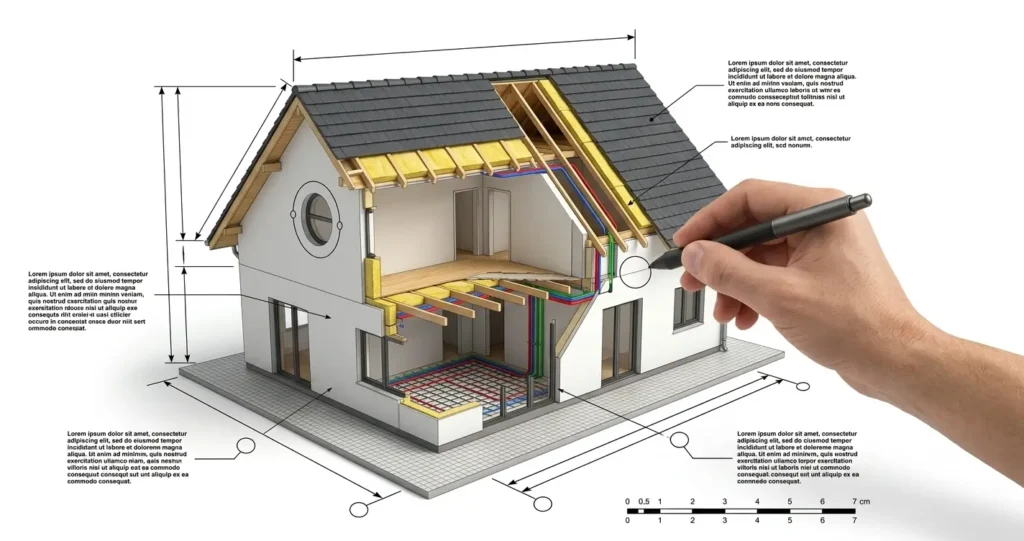
Selecting the right MEP engineering practice for a low-carbon development requires evaluating a firm’s technical rigor, toolset, and track record. Key criteria for project developers, architects, and institutional stakeholders include:
- Empirical Certification & Post-Occupancy Verification: Look for verified project performance, such as completed buildings with active LEED Platinum, Passivhaus, or Living Building Challenge certifications. Request post-occupancy evaluation (POE) data to confirm that designed energy consumption targets match actual operating metrics.
- Firm Commitment to MEP 2040 & Carbon Transparency: Confirm whether the firm is an active signatory to the MEP 2040 Challenge. Firms committed to this standard actively track equipment embodied carbon, evaluate low-GWP refrigerants, and work with vendors to source Environmental Product Declarations (EPDs).
- Advanced Computational & Building Physics Capabilities: Ensure the engineering team performs early-stage dynamic thermal modeling, computational fluid dynamics (CFD), daylighting simulations, and detailed hydronic analysis rather than relying on legacy rule-of-thumb sizing.
- Deep Expertise in Electrification & Heat Recovery Systems: Ensure the engineering team has demonstrated experience replacing fossil-fuel combustion infrastructure with centralized heat pump networks, thermal storage, variable refrigerant flow (VRF) systems, and heat recovery technologies.
- Integrated Commissioning & Retro-Commissioning Frameworks: Choose a firm that provides or supports comprehensive commissioning (Cx) and continuous, software-driven retro-commissioning. Proper commissioning ensures complex, sensor-driven building automation systems operate efficiently from day one.
Strategic Conclusion
Identifying which MEP engineering companies specialize in sustainable building designs involves evaluating both global industry leaders—such as PAE, Glumac, Buro Happold, Atelier Ten, Interface Engineering, Mazzetti, and Schnackel—and specialized regional firms like REMARS, BSE 3D, Barker Associates, CPW, and JPA M&E Consultants. These engineering practices demonstrate that achieving sustainable building performance requires integrating mechanical, electrical, and plumbing systems with the building envelope during early conceptual design.
By replacing fossil-fuel combustion plants with centralized heat pump networks, reducing embodied carbon through AI-optimized routing, implementing circular water treatment, and leveraging digital twin modeling, specialized MEP consultancies transform buildings into clean, resilient, and highly efficient assets. For real estate developers, institutional owners, and architects, partnering with experienced MEP engineering specialists is the most effective strategy to ensure regulatory compliance, reduce operational expenditure, and achieve verified net-zero performance across the built environment.